159 Seymour Street
Description of Historic Place
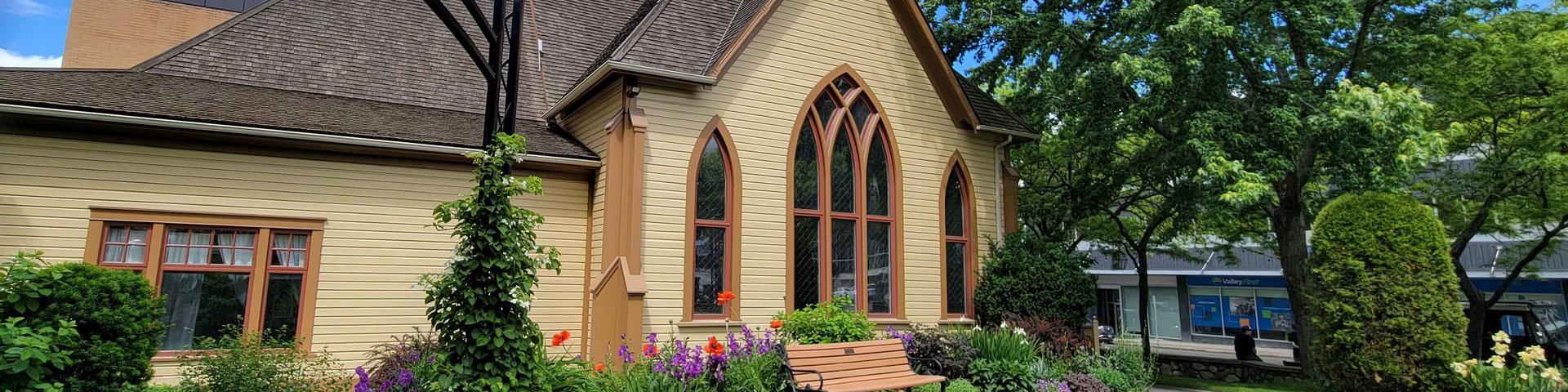
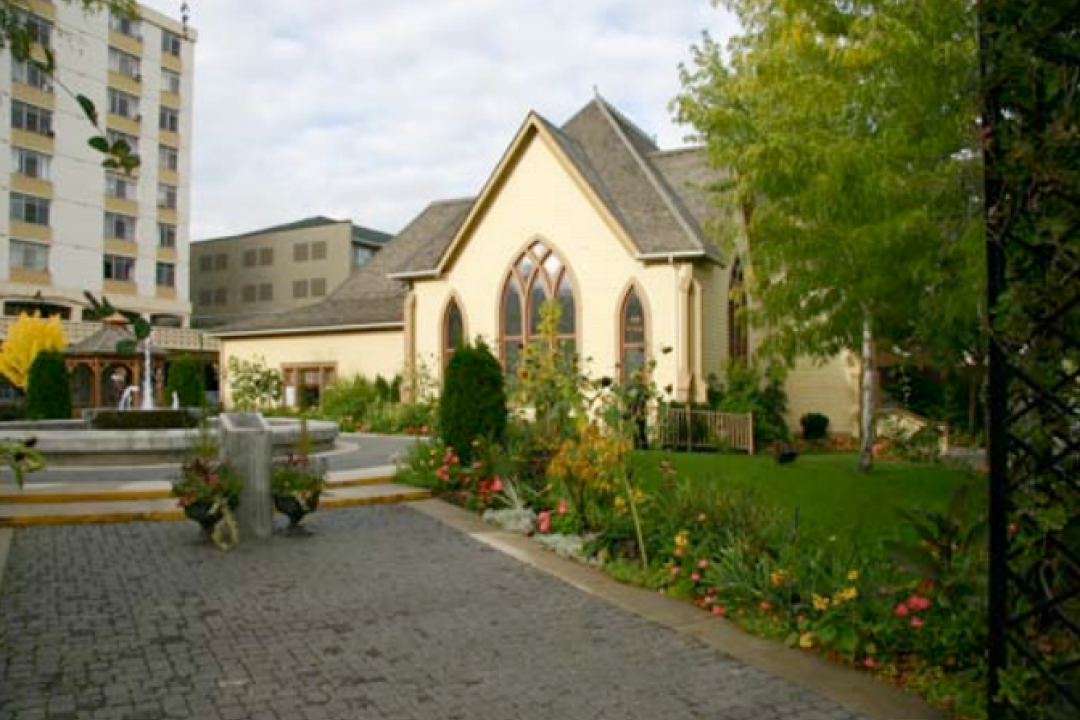
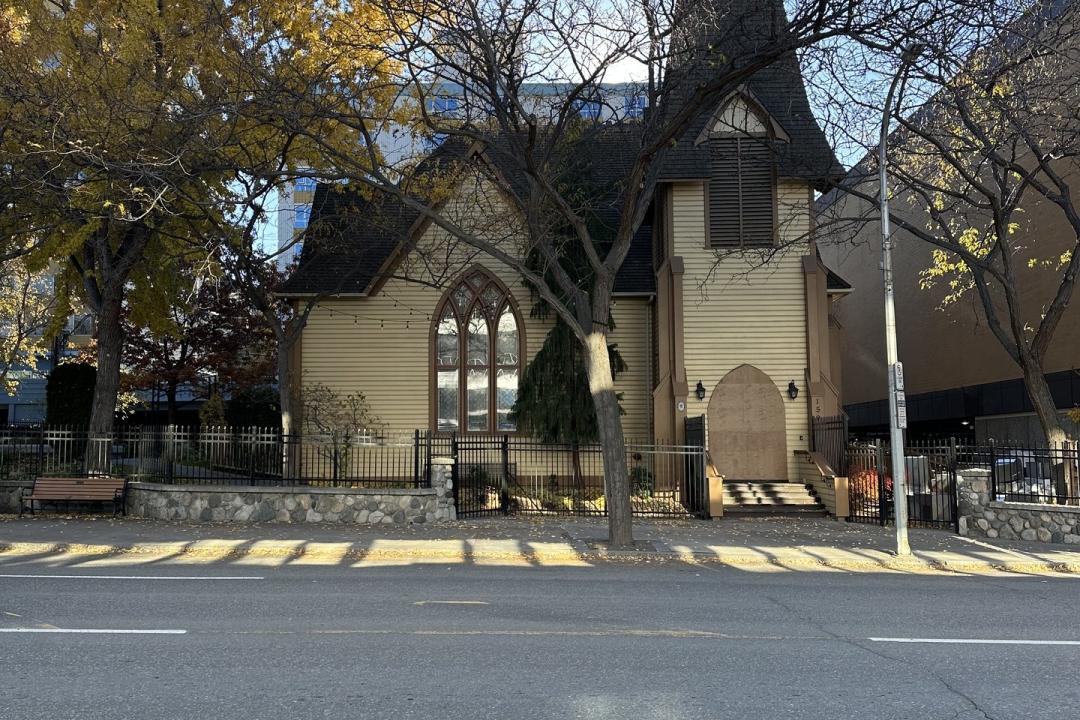
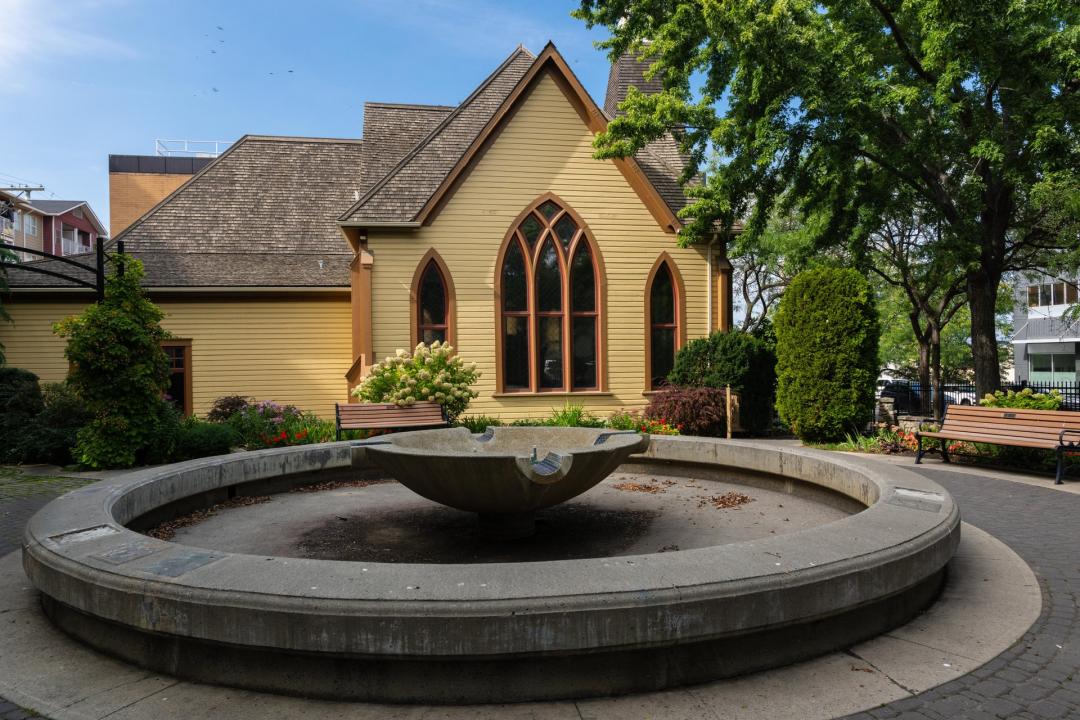
Located in the heart of downtown Kamloops, St. Andrew’s on the Square is a prominent, late Victorian Gothic Revival church located at the corner of Seymour Street and Second Avenue. The church features an offset square front tower with spire and gabled vents, unique corner buttress detailing and Gothic pointed-arch windows and doors. A large public plaza is now located to the east side.
Heritage Value
St. Andrew’s on the Square is significant as a community facility and focal point that has served the changing social and religious needs of Kamloops residents for well over a century. This is also the City’s oldest public building. Reflecting the growth of the city and the expansion of the original local Presbyterian congregation, plans to build Kamloops’s first permanent church commenced in 1887. Spearheaded by Reverend John Chisholm, over $5,000 was raised to build the church on land donated by the CPR, at a location considered to be on the outskirts of town at the time. Construction funds were raised largely by CPR employees, many of whom were of Scottish descent.
The church was built with lumber from the James McIntosh lumber mill. Named St. Andrew’s Presbyterian Church, it held its first service on Christmas Day, 1887 and served a Presbyterian congregation until 1925, when Unification resulted in the formation of the United Church of Canada. Between 1927 and 1936, the church was used by various groups for meetings and as a badminton hall and from 1936 to 1942, by the St. Andrew’s and New Caledonian Society. The Pentecostal Assemblies of Canada bought the church in 1942, renaming it the Calvary Temple.
The Reverend Phil Gaglardi (1913-1995), future Minister of Highways famed for the expansion of B.C.’s road and ferry systems, headed up the church, completing a restoration and a large addition to the south in 1945 and 1958 respectively. The church remained in their ownership, and was eventually converted into a gymnasium and Sunday School classes. During the late 1950s and 1960s, this site housed the largest Sunday School in Canada. The church slowly fell into disrepair until 1991, when it was bought by the City to avoid demolition. In 1996, through the collective efforts of tireless volunteers, the Kamloops Heritage Society, the City of Kamloops and a grant from BC Heritage Trust, the church was restored to its original exterior presence and now serves as a successful community centre and reception hall.
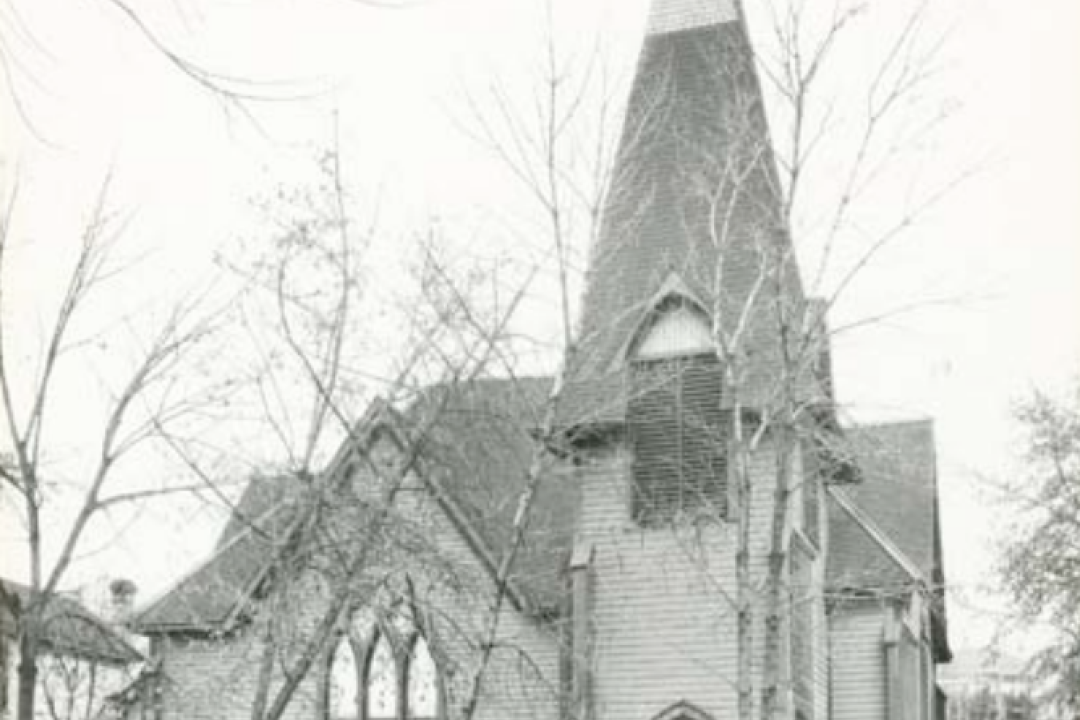
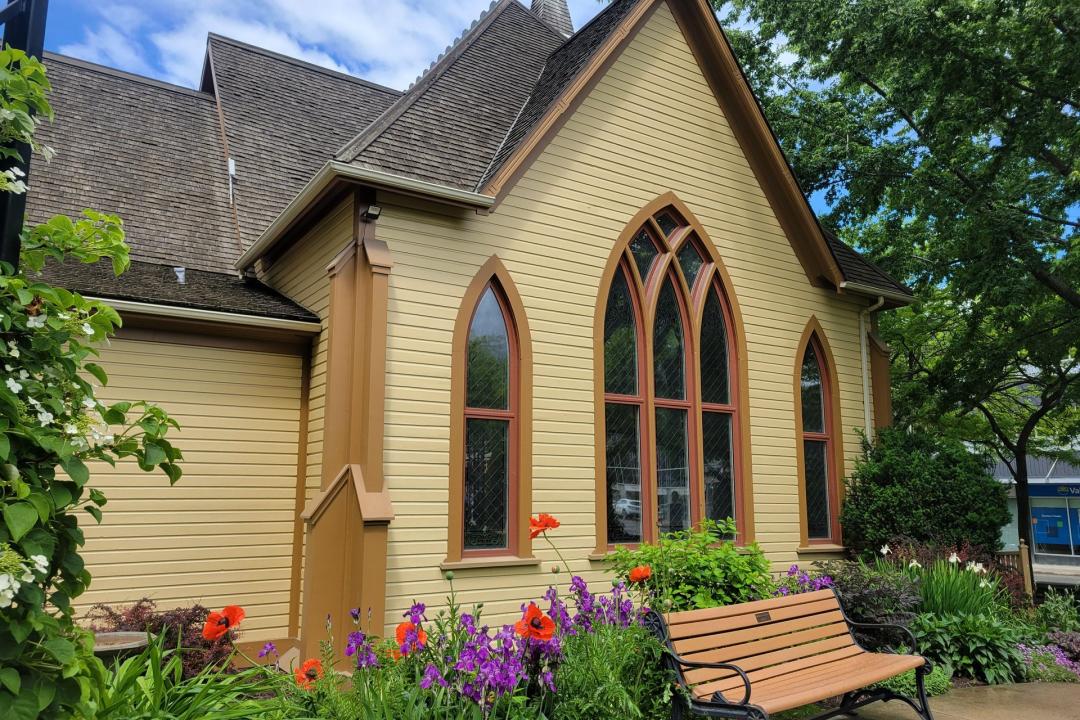
St. Andrew’s on the Square is also a noteworthy late Victorian example of the Gothic Revival style. The church boasts impressive Gothic pointed-arch windows with elegant yet simple tracery. The window sashes are fitted with stained glass panels that have been donated by various firms and residents since 1999. The steeple, with a square base and pyramidal roof with front-gabled louvers on each side, is an unusual feature. Wood buttresses at the corners of the church, whalebone bargeboards and a scalloped wooden roof ridge are distinctly Gothic Revival features.
Furthermore, the Church is a significant surviving example of the work of architect, civil engineer and surveyor Robert Henry Lee (1859-1935), who moved to Kamloops from the United States in 1884, and remained here for the rest of his life. Lee was responsible for laying out the townsites of Nicola, Merritt and Princeton, and produced architectural designs for numerous residences, a Roman Catholic Church, a branch for the Bank of B.C. and this church. His architectural accomplishments in this frontier community were prodigious. Lee also became active in civic affairs, was elected to the first Kamloops Council in 1893, then served as mayor from 1894-1896.
Character-Defining Elements
Key elements that define the heritage character St. Andrew’s on the Square include its:
- corner location in downtown Kamloops on Seymour Street at Second Avenue - continuous use as a public facility
- ecclesiastical form, scale and massing as expressed by its steeply pitched cedar-shingled cross-gabled roof with open eaves, detailed mouldings and notched whalebone bargeboards; square corner tower with entryway; and steeple with gabled louvered vents, fishscale shingles decorative metal cap and vane
- wood-frame construction, with original wooden drop siding with corner boards and scroll cut trim
- late Victorian vernacular Gothic Revival detailing, such as wooden tracery in Gothic pointed-arch windows and stepped buttresses
- interior features including a vaulted ceiling with a checkerboard of diagonally-patterned wooden paneling
- associated landscape features such as public square and mature deciduous trees