
155 Tranquille Road
Description of Historic Place
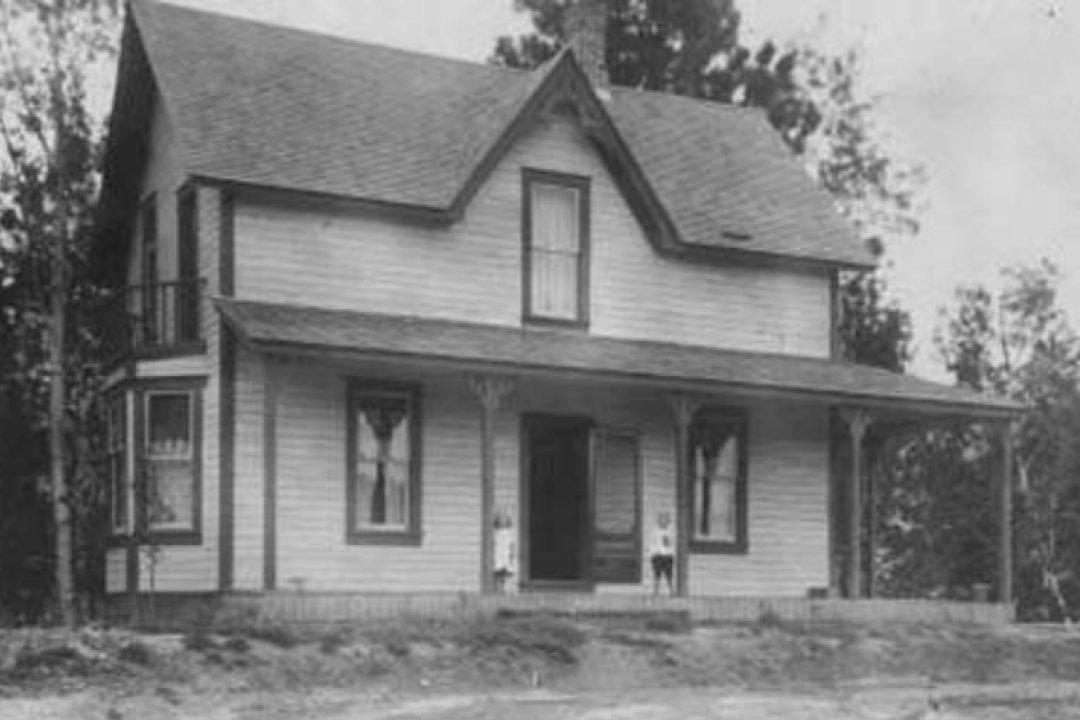
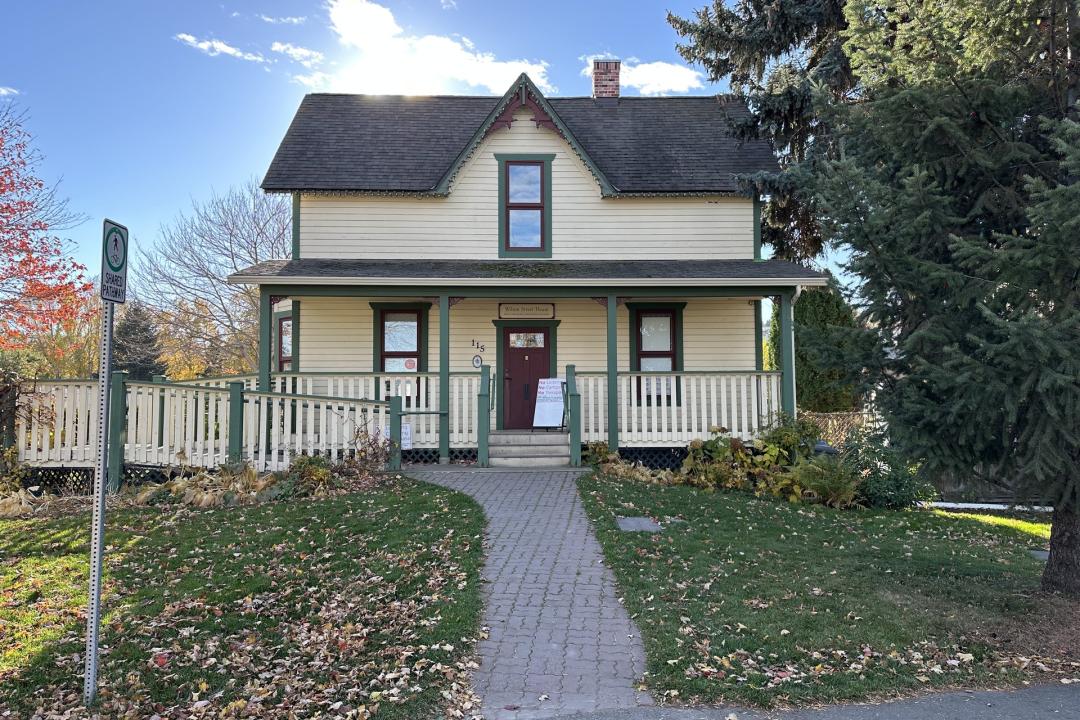
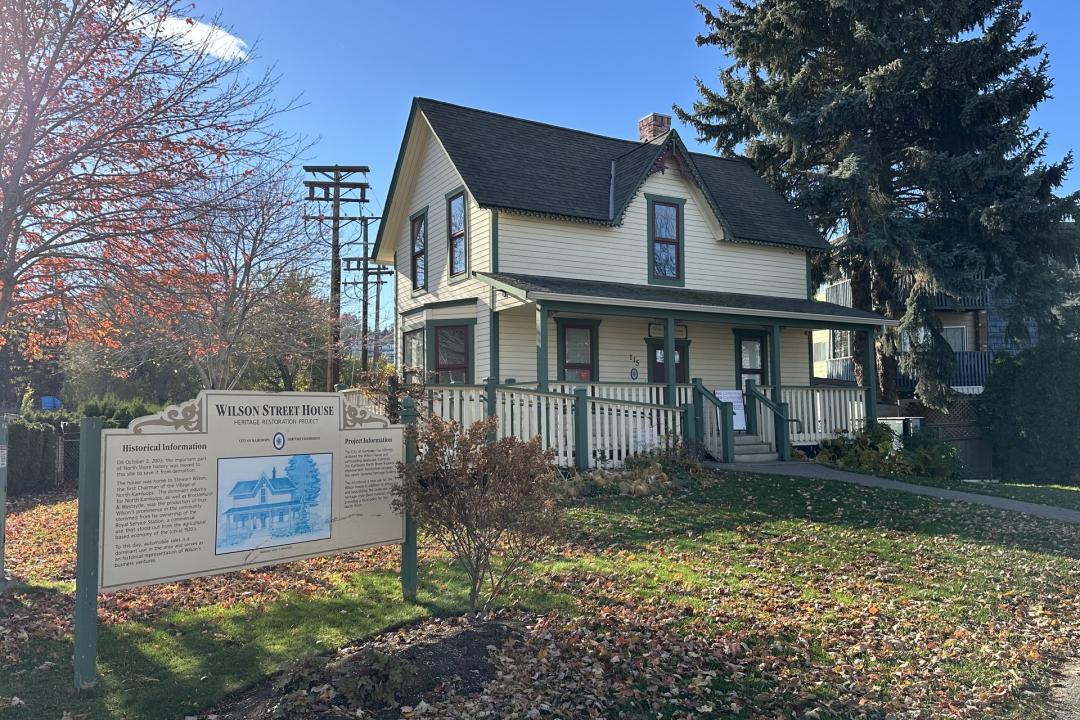
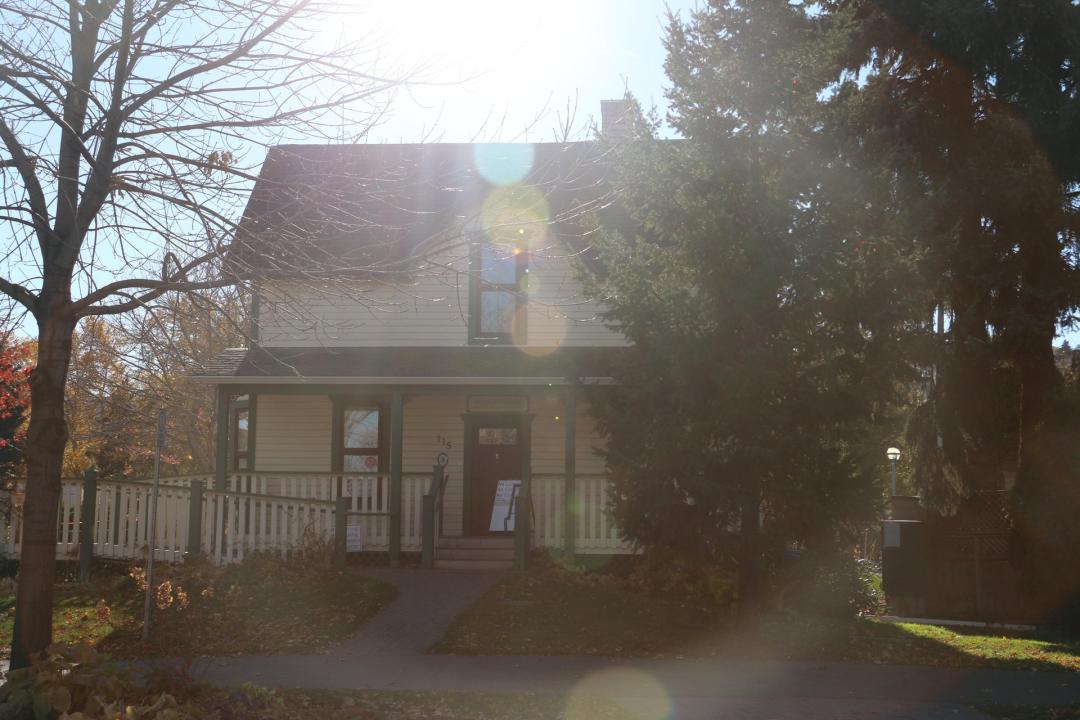
The Wilson Street House, now relocated to Tranquille Road, is a one and one-half storey, wood-frame house with a steeply pitched side-gabled roof, a central gabled wall dormer and a full width open verandah. It is situated within the low-density residential neighbourhood of North Kamloops.
Heritage Value
The Wilson Street House, constructed circa 1909-1910, is valued for its connection with William Stewart Wilson (1903-1994), who was an esteemed member of the Kamloops community. In 1927, William Stewart Wilson married Winnifred in Alberta. Two years later the couple moved to Kamloops to farm just east of Exptal Farm. In 1934, Wilson opened Wilson Motors, which offered automobile services, a commercial business distinct from North Kamloops’s agricultural economy of the early 1930s. Wilson Motors was located on acreage surrounding the house and Tranquille Road. William Wilson also was an important political figure in the community and British Columbia. He was President of the British Columbia Auto Dealers Association and Vice President of the Canadian Auto Dealers Association. In 1946 he was elected first commissioner for the village of North Kamloops, a position equivalent to that of mayor. The following year, in 1947, he was elected as chairman of North Kamloops. William Stewart Wilson and Winnifred occupied the house until 1950. The house was briefly used as the Church Manse, before members of Wilson family took up residence again.
The Wilson Street House is further valued for its association with first owner, Frank Edward Baines (1888-1958), who was a local farmer. American-born Baines was uncle to William Stewart Wilson and occupied the house, along with his wife Mary, between 1909 and 1920. The house was constructed in a traditional farmhouse form that was influenced by the Gothic Revival style, with symmetrical massing, a central entry, a central gable wall dormer and Carpenter ornamentation.
The Wilson Street House is also significant as a representation of the development of North Kamloops. The North Shore was primarily a rural farming area with orchards and fields until 1909 when B.C. Fruitlands, a British-based company was incorporated, obtaining over 9,000 acres on the North Shore. By 1920, the company had increased its holdings to over 22,000 acres and installed an extensive irrigation system that supplied water to all of North Kamloops. After the irrigation system was installed, the company promoted programs to attract settlers to the area. Over time, the patchwork of farms developed into a community and in 1946, the village of North Kamloops was incorporated. At this time, Wilson Street, which was named in honour of the family, was surveyed and subdivided, leaving the Wilson Street House situated in the middle of the street. The house was subsequently moved back and turned around in order to face the new street. In October of 2003, the Wilson Street House was moved to 115 Tranquille Road, and is now the home of the Kamloops North Shore Business Improvement Association.
Character-Defining Elements
Key elements that define the heritage character of the Wilson Street House include its:
- residential form, scale and massing as expressed by its one and one-half storey height with steeply pitched side-gabled roof and side bay window
- construction materials as expressed by wood-frame construction and wooden drop siding
- elements of the Gothic Revival style such as its symmetrical massing, central entry, central wall dormer, full-width open verandah, and front gable screen
- internal red-brick chimney
- interior details such as the staircase with a lathe-turned newel post