500 Lorne Street
Description of Historic Place
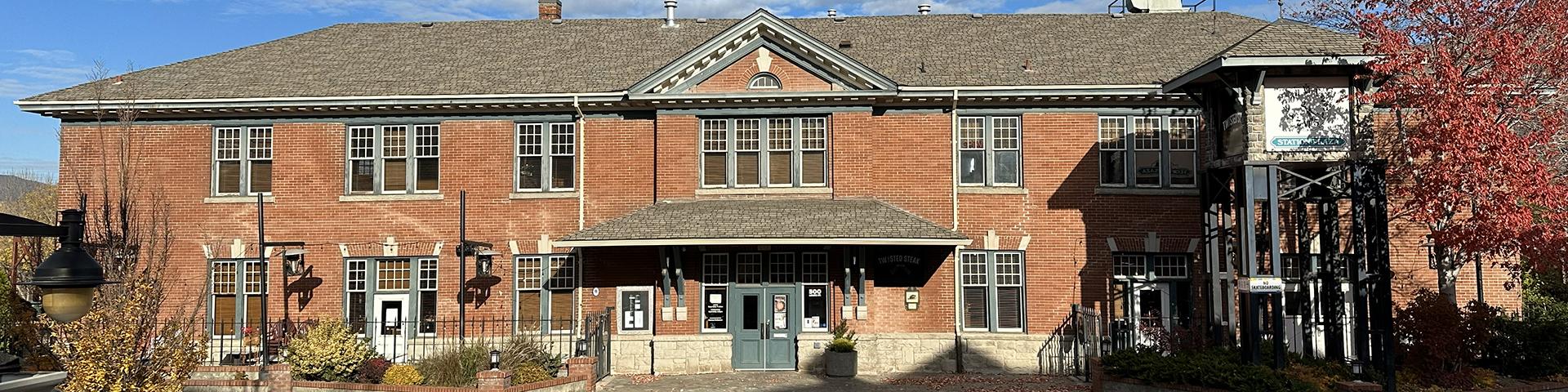
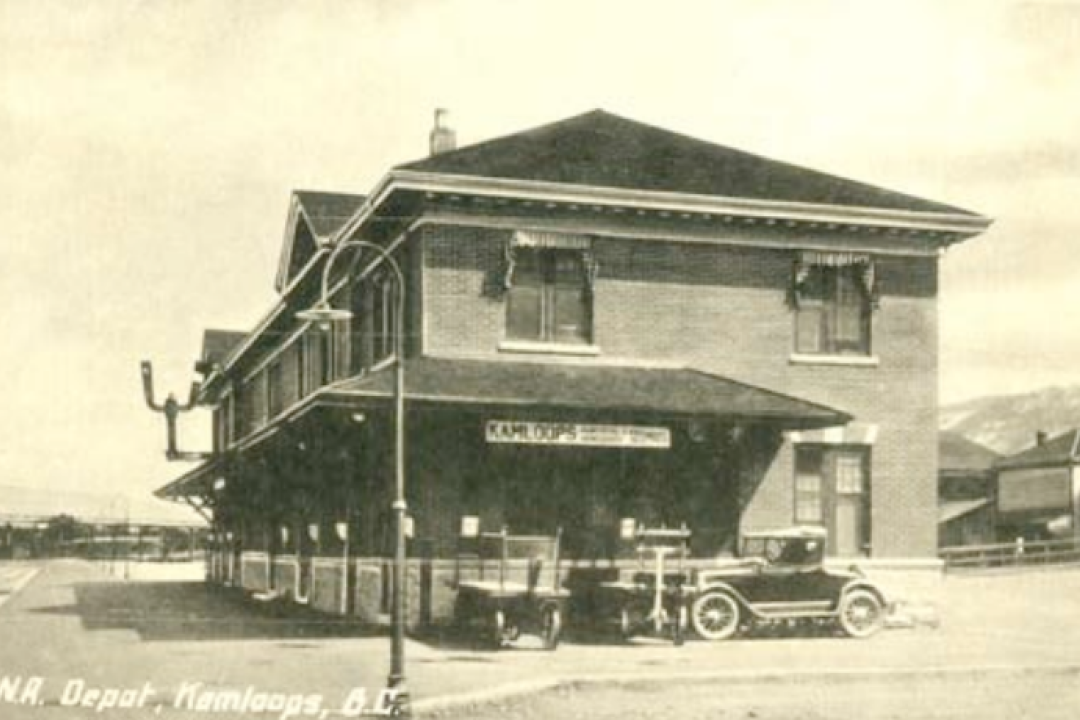
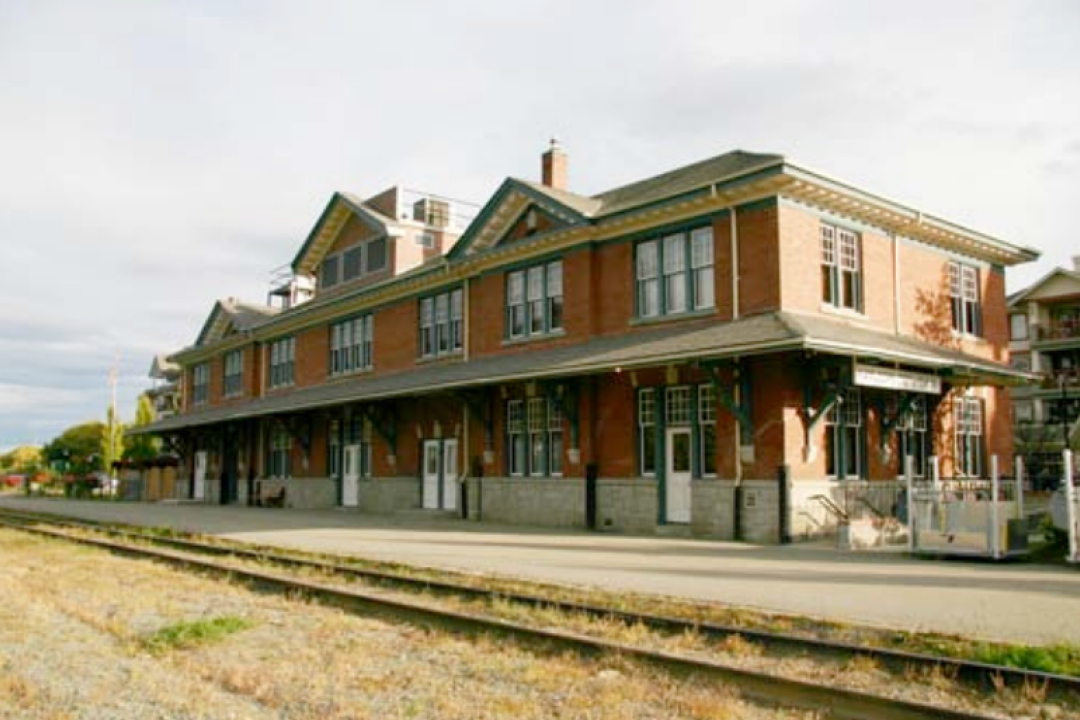
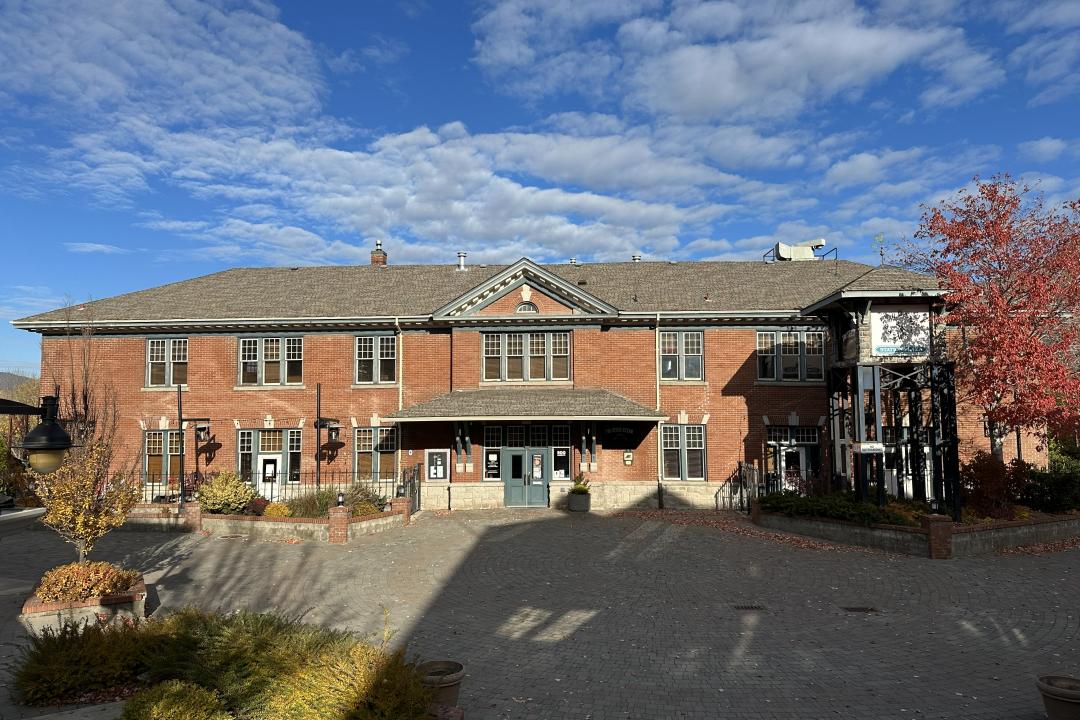
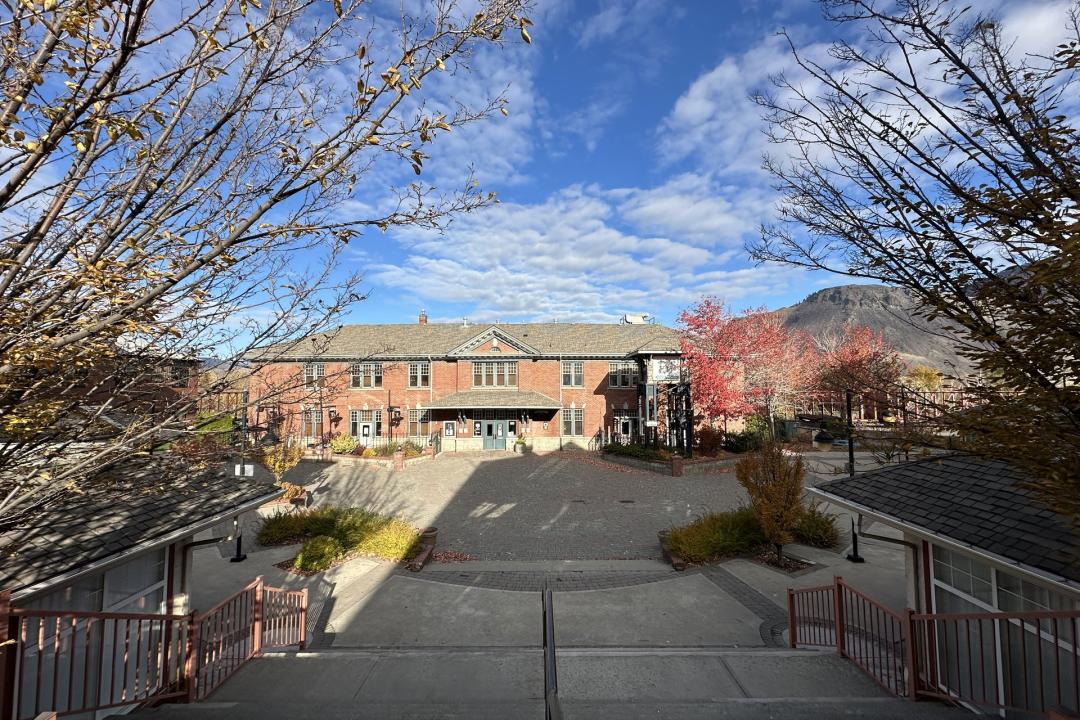
The CNR Station is a large, two-storey train station, with a symmetrical front entry, hipped roof, red-brick cladding and Classical Revival detailing. The south (front) elevation has a prominent central entry with a projecting gable above. The north (rear) elevation has two gable projections and a cantilevered wraparound canopy that protects the passenger loading area. The station has regular multi-paned, multi-assembly fenestration and distinctive block modillion cornices. Built in 1926-27, it is situated at the bottom of Fifth Avenue, on the north side of Lorne Street, adjacent to the CNR rail tracks, just outside downtown Kamloops. In 1992, it was designated by the federal government as a heritage railway station under the Heritage Railway Stations Protection Act.
Heritage Value
The CNR Station is significant for its connection with the establishment and growth of the Canadian National Railway, simultaneously marking a period of economic growth in Kamloops. In 1919, the Canadian Northern Railway was incorporated with the Grand Trunk Pacific Railway, forming the Canadian National Railway. This amalgamation allowed the CNR to compete aggressively with the Canadian Pacific Railway, which had previously established its transcontinental line through Kamloops in 1885. Originally the CNR station was situated north of the city at the Kamloops Junction, which was inconvenient for passengers and freight transport. In 1918, a temporary bridge was completed over the South Thompson River into Kamloops, permitting trains to run into town. The CNR’s service improved dramatically in 1925 when they introduced both a daily mail service from Kamloops to Edmonton and a branch line that ran to Kelowna, which confirmed Kamloops’s importance as a regional centre. By 1926, a permanent steel swing bridge replaced the temporary bridge. This station, which functioned as both the passenger depot and as the CNR office building, was built as part of this larger complex of rail-related improvements. The unusually large size of the structure indicates its regional importance.
Additionally, the CNR Station is valued as a superior example of the restrained classicism typical of the post-World War One era. The design for the building was prepared in Winnipeg by the CNR Architectural Division. Constructed of local pressed red brick, the symmetrical façades have well-proportioned features, including cast stone door and window voussoirs and massive wooden brackets that support the front and rear canopies. The original layout of the interior was typical of railway stations at the time. The main floor was utilized as the baggage area, ticket office, washrooms, ladies waiting room and the men’s smoking room. The top floor housed the offices for the superintendent and his assistants. The partial basement area was used for general storage and the heating planting.
The CNR Station is symbolic as a testament to the ability of local contractors, Johnston & Company, led by William Henry Johnston (1864-1931) and James Adam Gill (1856-1940). The firm also owned the Kamloops brickyards and were among the leading contractors in the city. They were also responsible for several of Kamloops’s landmark structures including the Old Bank of Commerce.
Character-Defining Elements
Key elements that define the heritage character of the CNR Station include its:
- location, at the north end of downtown Kamloops, adjacent to the CNR railway tracks
- form, scale and massing as expressed by its: two-storey height; hipped roof; symmetrical rectangular plan; prominent central front entry with cantilevered canopy and projecting gable above; two projecting gables on the north elevation; and wraparound cantilevered canopy at the rear
- construction materials such as pressed red-brick cladding, random-coursed sandstone base; cast stone detailing; galvanized metal modillions, and heavy timber brackets
- Classical Revival detailing such as projecting block modillion cornices, pediments, and brick and cast stone voussoirs
- fenestration: 9-over-1, double-hung, wooden sash windows in multiple assembly; lunette windows in the gables; and glazed wooden doors
- associated railway platform and tracks to the north side