
740 Victoria Street
Description of Historic Place
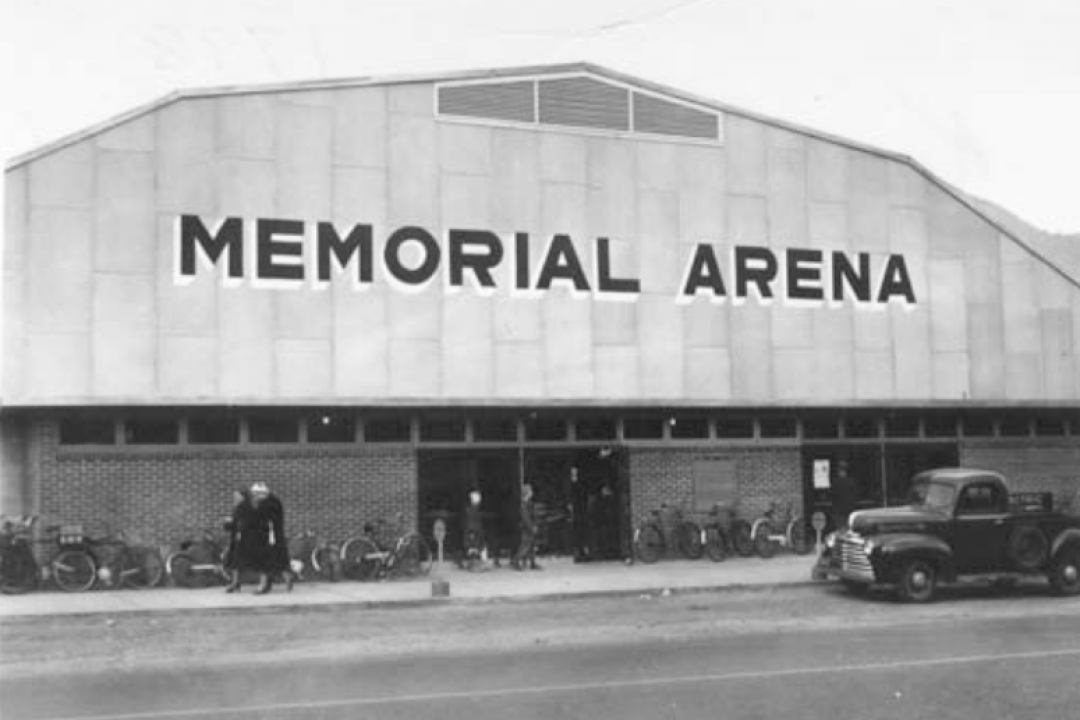
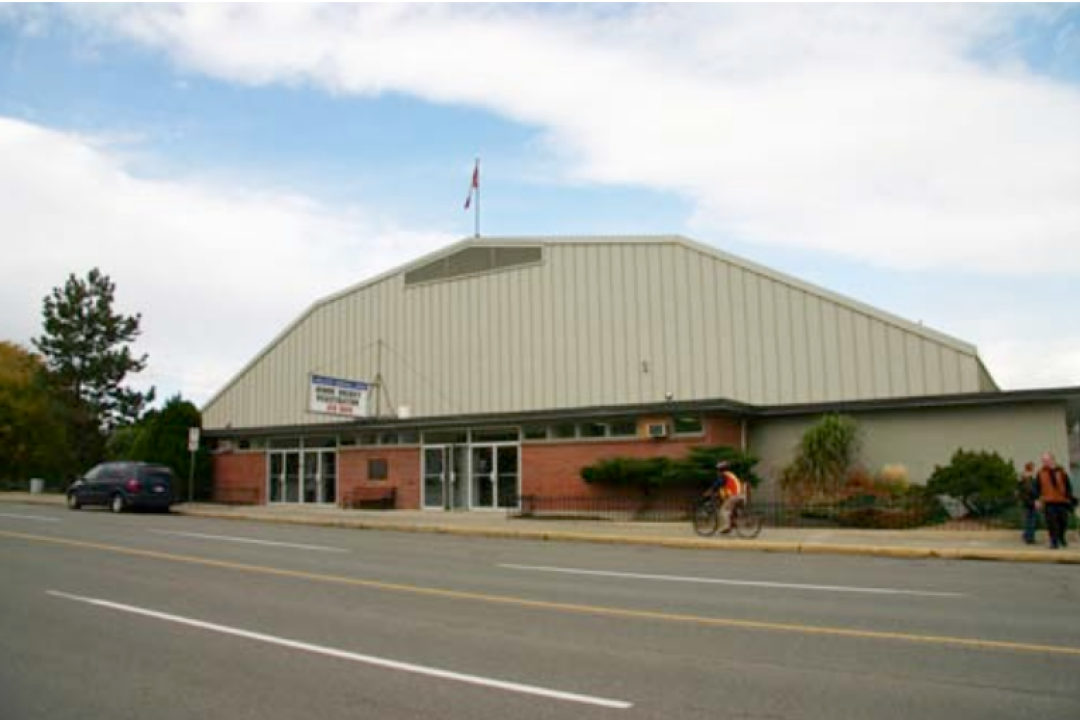
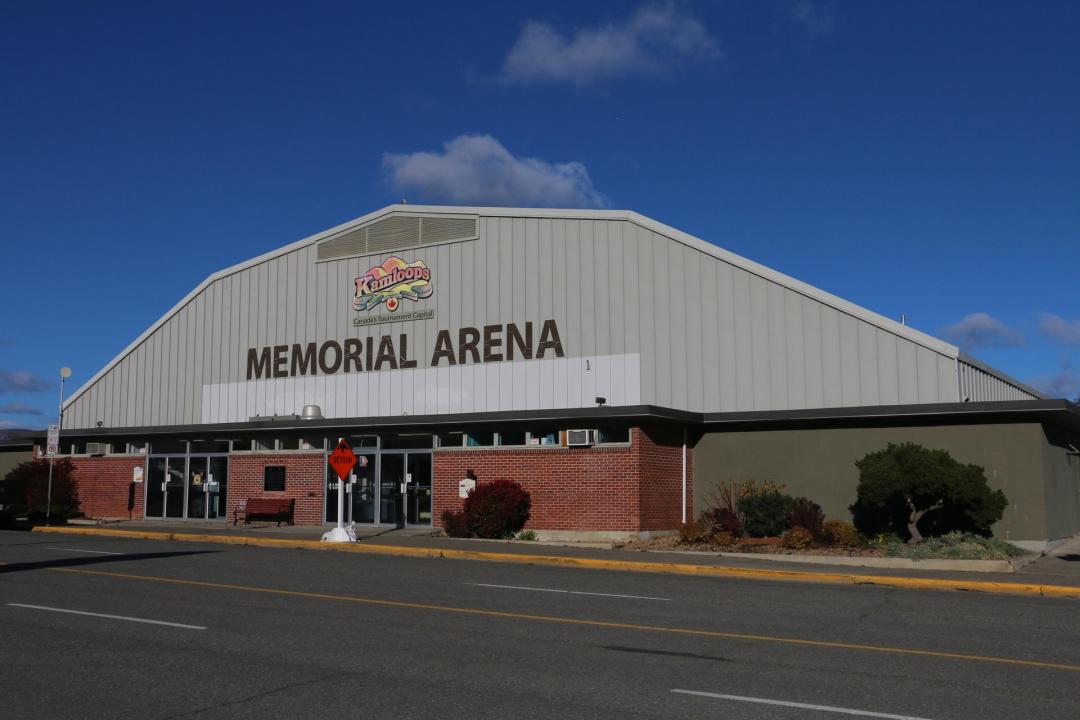
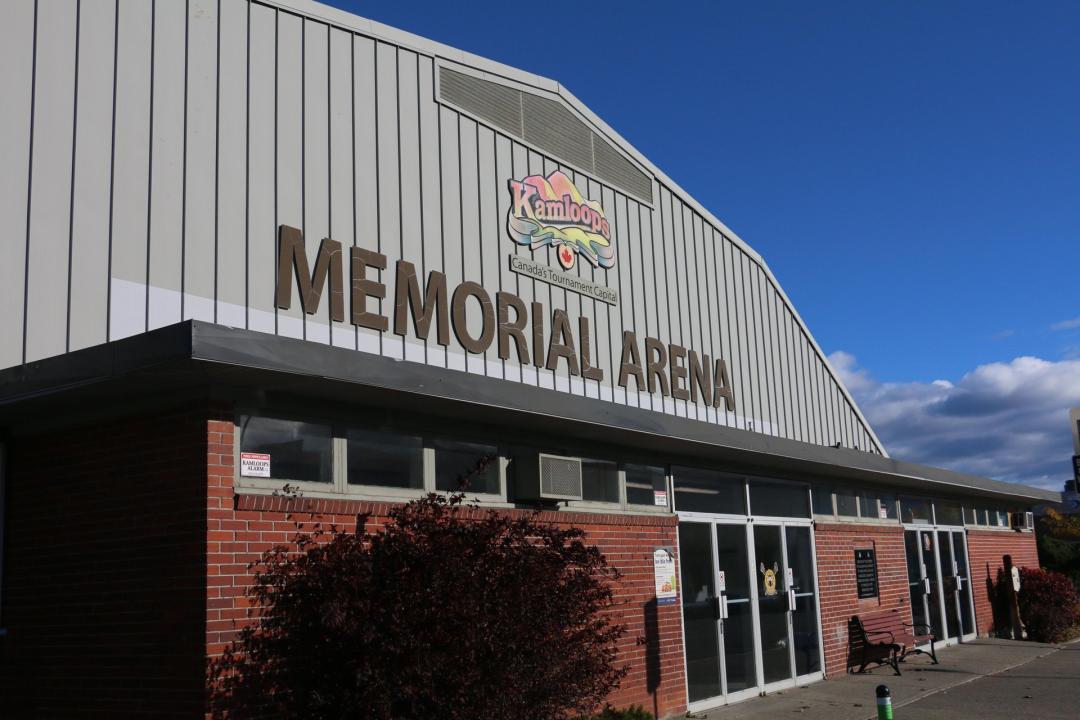
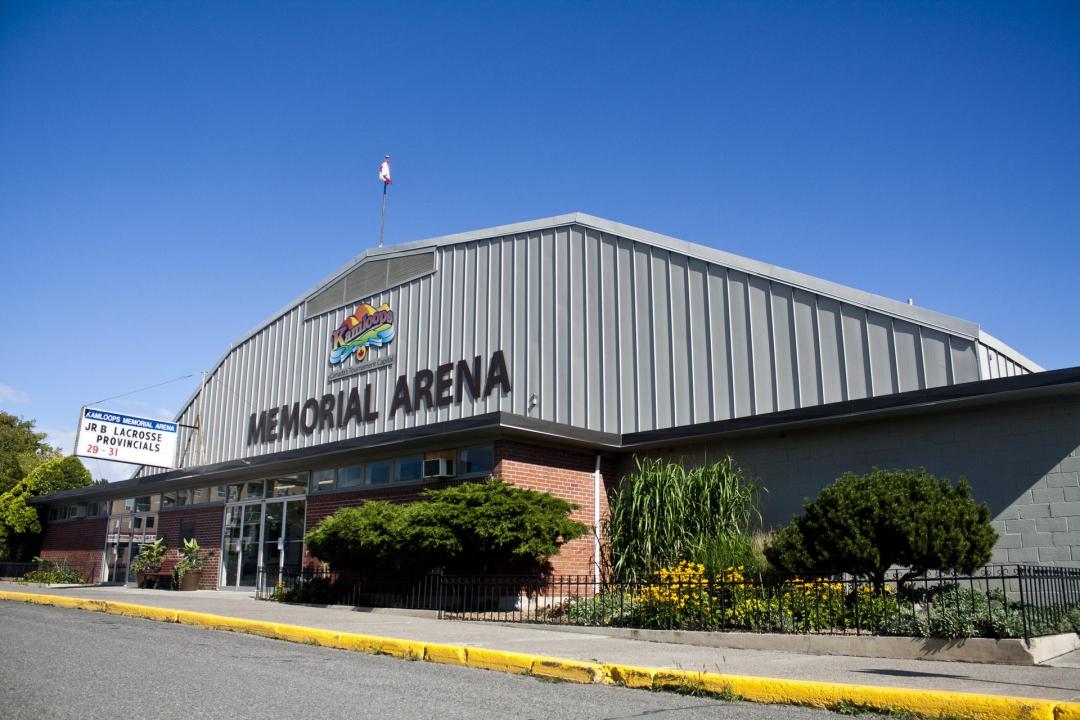
The Memorial Arena and is a large sports arena with a high, dual-pitch roof that is centrally located on Victoria Street in downtown Kamloops. Built with a concrete base and steel truss roof structure, the arena seats approximately 2,700 and is utilized by organized and recreational hockey teams. A horizontal entry pavilion with clerestory ribbon windows is clad in red brick, and there is a dedicatory bronze plaque centred between the main entries.
Heritage Value
The Memorial Arena is significant as a representation of postwar community efforts to commemorate lost soldiers, build community pride and construct new recreational facilities. At the end of World War Two, the return of the troops signalled the start of a boom in population growth and a gradual return to prosperity. Wartime restrictions on non-military construction had deprived communities of badly-needed recreational and educational facilities. Many communities enthusiastically supported initiatives to both memorialize as well as develop new sports facilities. The Kamloops and District War Memorial Recreational Society, incorporated in 1945, set out to raise funds for the first local artificial ice rink. It was designed as part of an ambitious larger complex known as Memorial Centre that was to include a swimming pool, curling rink and meeting rooms. Vancouver-based architect Charles Burwell Kerrens Van Norman (1906-1975) was hired to design the whole complex, however only the arena portion was built. In addition to local fundraising, the Society organized a country-wide raffle, raising over $173,000 of the estimated $220,000 total cost; the municipality borrowed the remaining funds. Construction began in 1948 and the arena was dedicated on November 11, 1949.
The Memorial Arena is also valued for its association to the growth and development of organized hockey leagues in Kamloops and for its continuous use as a hockey venue. The first organized local hockey leagues were formed after World War One; a Junior league in 1918 and a Senior league in 1919. Under the sponsorship of the B.C. Stock Breeders and the provincial government, a small arena was built on the east end of town and the hockey leagues were allotted time to play during the winter months. It was not until 1931 that the first open air arena was built. Plans for an artificial ice rink did not surface until 1939, but these were put on hold with the onset of the Second World War. This became the primary arena for the Western Canada Hockey League junior hockey teams: the Kamloops Chiefs (1973-1977); the Junior Oilers (1981- 1984); and the Kamloops Blazers (established in 1984). Memorial Arena was superceded by the Riverside Coliseum (now the Sandman Centre) in 1992; however, it continues to be actively used by lower level hockey teams.
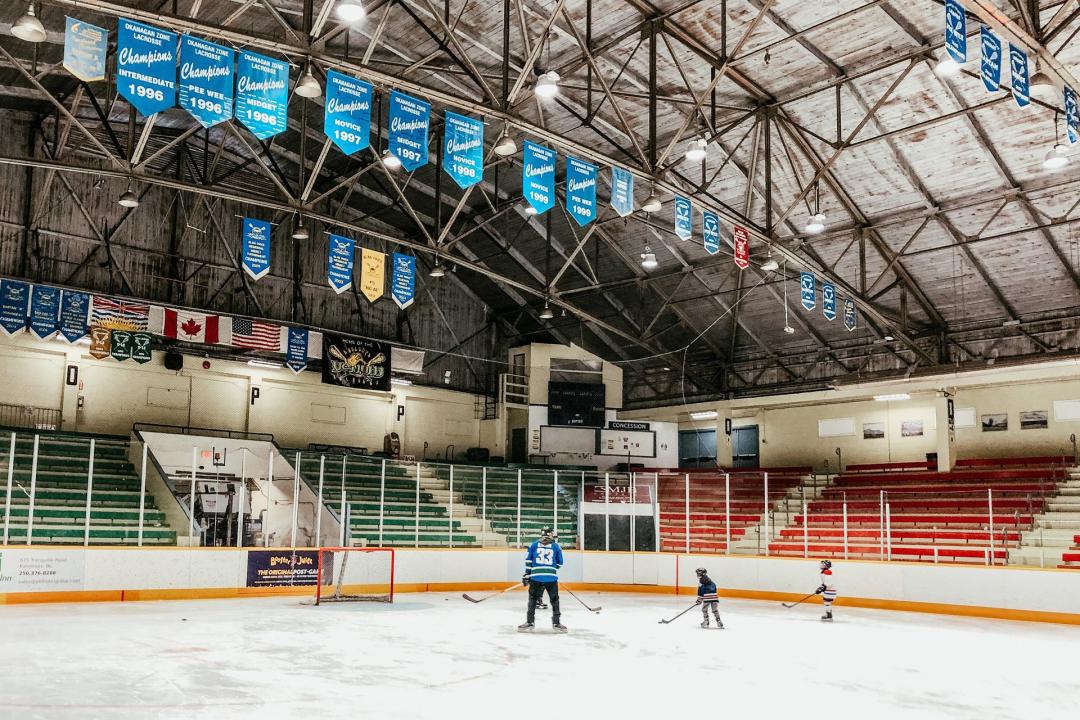
Furthermore, the Memorial Arena is a significant example of a large clear-span structure that is representative of contemporary engineering. Supported on a concrete base, the massive exposed steel truss roof supports heavy timber purlins and a plank roofing deck. The use of timber in the superstructure and red brick on the front façade attests to the presence of local brick and lumber industries. The flat roof entry pavilion with its horizontal ribbon windows demonstrates the influence of the International Style movement that gained popularity in the postwar era.
Character-Defining Elements
Key elements that define the heritage character of the Memorial Arena include its:
- location on Victoria Street in downtown Kamloops
- continuous public assembly and recreational use
- institutional form, scale and massing as expressed by its single-storey height; large rectangular open-span interior space; low dual-pitched roof over the arena; and flat roof at the entry
- construction materials, including: board-formed reinforced concrete used for the foundations and structural piers; concrete block infill walls; massive steel roof trusses; wooden purlins supporting a wooden plank roof; heavy timber end walls; and red-brick cladding at entry
- International style influences as expressed by the horizontally-proportioned, flat-roofed entry pavilion with wood-frame clerestory ribbon windows
- additional exterior features such as the bronze dedicatory plaque placed at the centre of the front façade
- interior features including: concrete stands with wooden bench seating; wooden floors and ceilings; and exposed interior structure