
245 St. Paul Street
Description of Historic Place
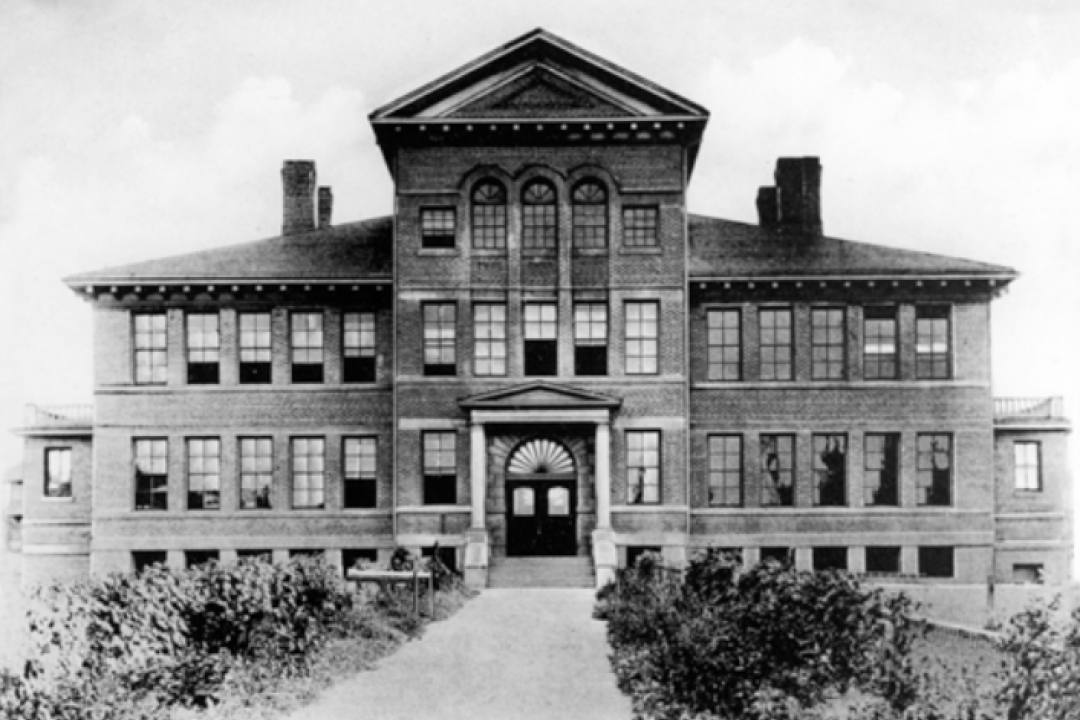
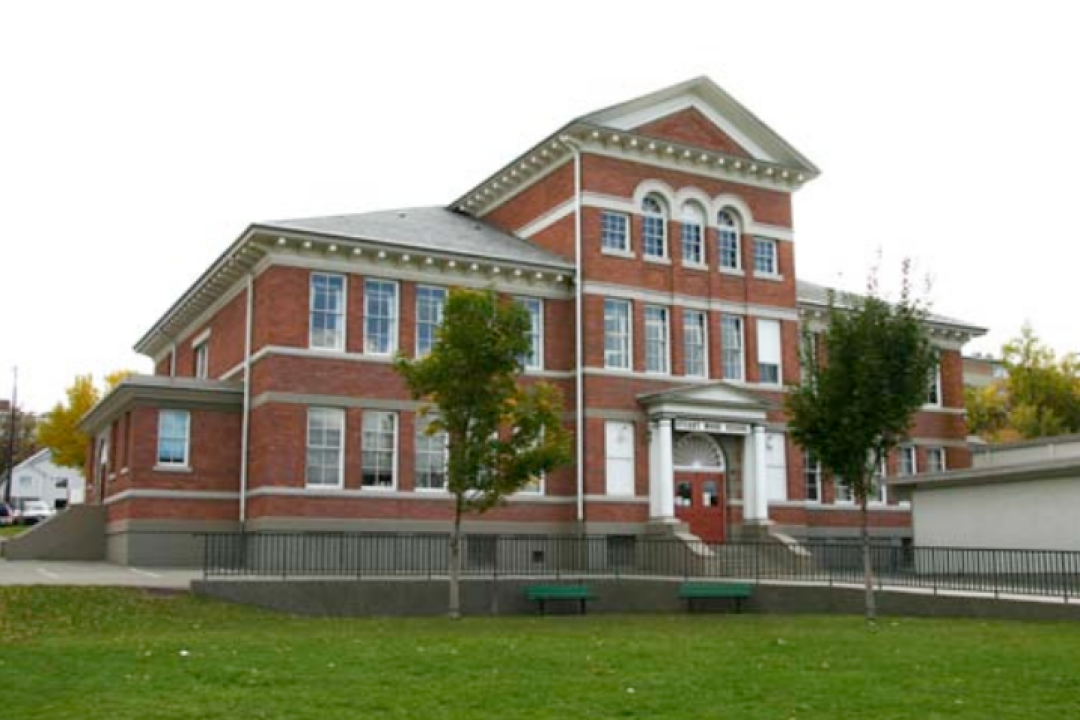
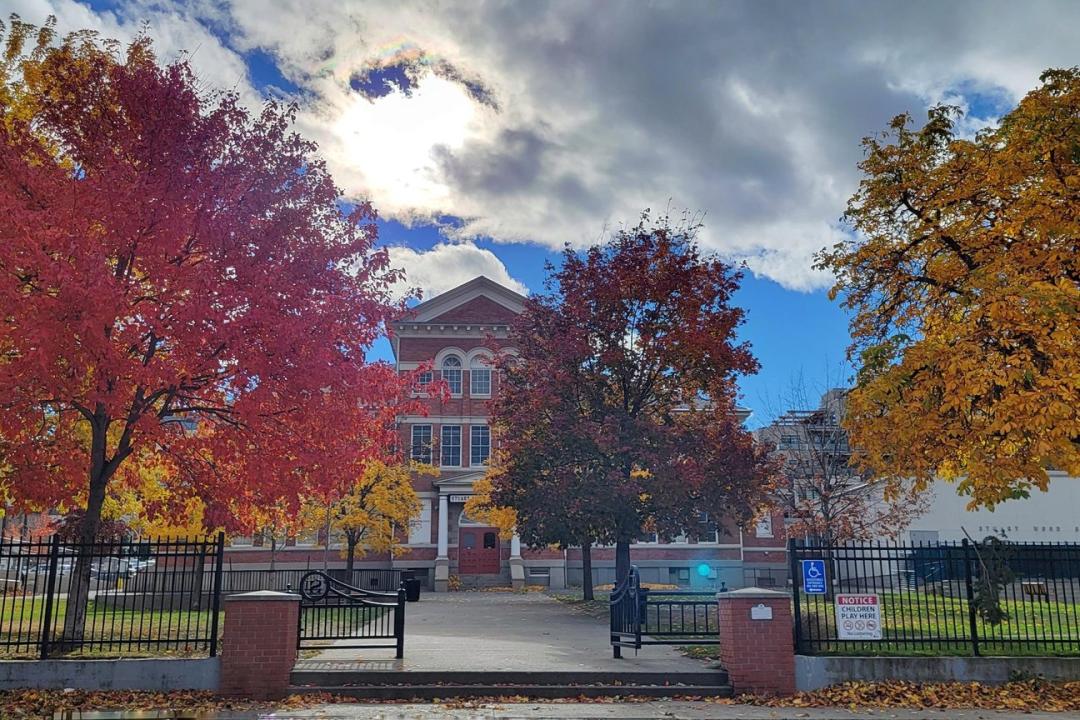
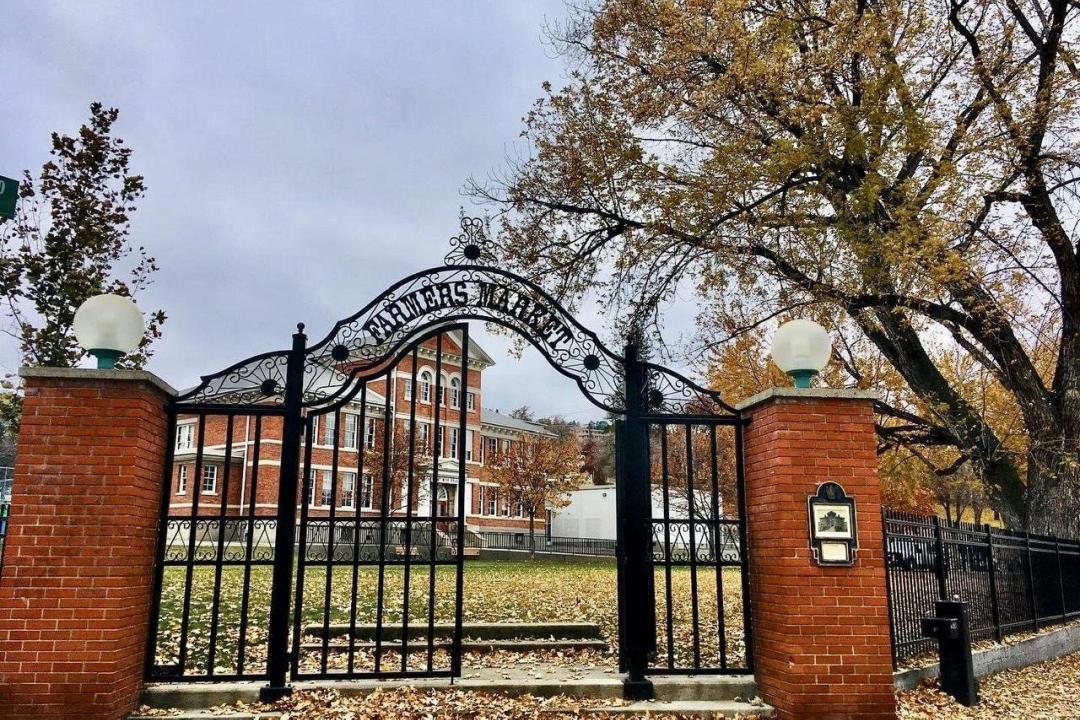
The Stuart Wood School is a three-storey schoolhouse with a symmetrical façade, clad in red brick, with a broad hipped roof, front and rear gabled projections and Classical Revival detailing. Built in 1906-07, it is situated on a large corner lot, surrounded by an open schoolyard with mature perimeter plantings, set far back from the street, on the south side of St. Paul Street in the downtown core of Kamloops. Stuart Wood School still operates as an elementary school

Heritage Value
Stuart Wood School is significant as one of the earliest surviving schools in Kamloops, and its prominence demonstrates the growth and development of the community over time and the high value that was placed on public education. Opened in 1907 as the Kamloops Public School, it played a vital role in the life of local children. Built just fourteen years after Kamloops was incorporated, this was the town’s third public school to be constructed within a twenty-one year period. Kamloops’s first public school was built in 1886 on the site of the Old Court House; however, the town’s rapid population growth necessitated that another school be built in 1892, which was followed shortly by the construction of this school in 1906-07. Until 1913, the elementary grades met on the first two floors, while the high school grades met on the top floor.
The first principal, Edward Stuart Wood (1857-1942), originally from Peterborough, Ontario, moved to Kamloops in August 1886. Here he met his wife, Gertrude Clarke (1967-1919), who worked as the first assistant at the school and was also the daughter of the first Mayor of Kamloops, Dr. Sibree Clarke. The couple married in Kamloops in 1888. Wood retired from teaching in 1910, but continued to live in Kamloops until his death in 1942. This school was renamed in his honour in 1922.
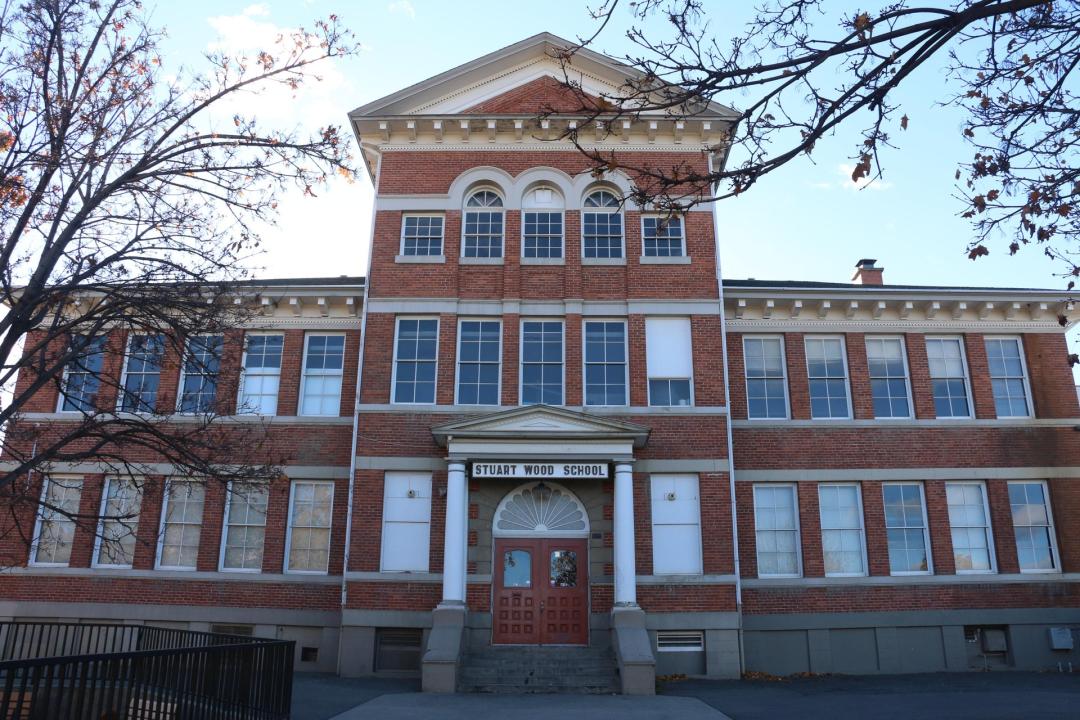
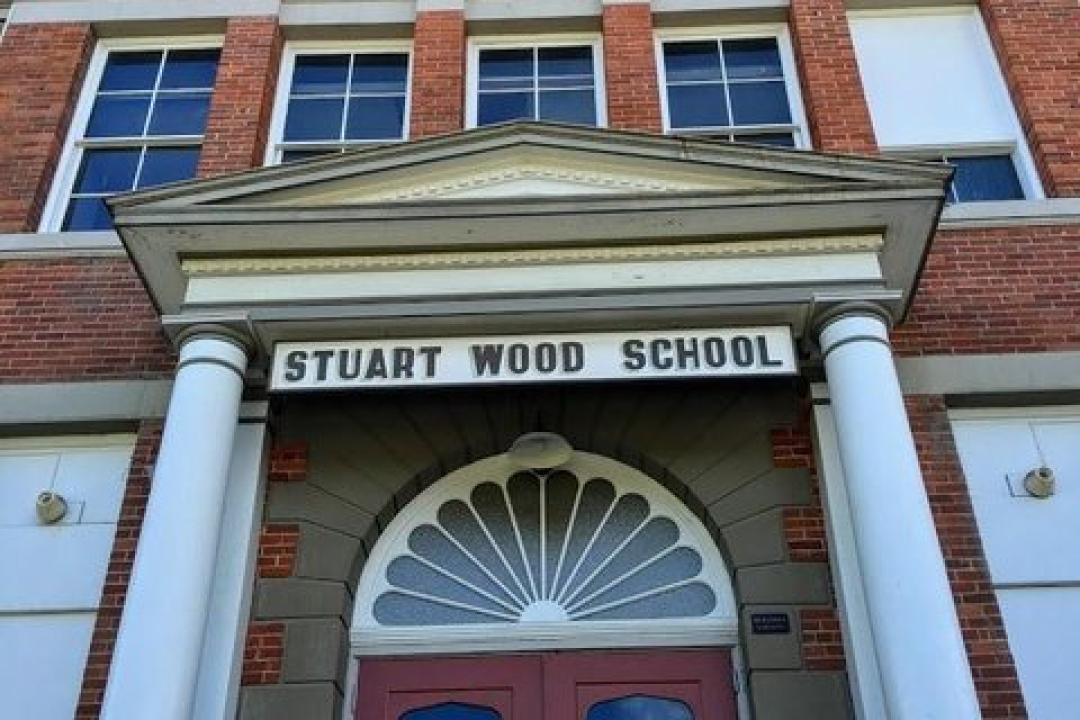
Stuart Wood School is also a very significant example of the architectural work of William Tuff Whiteway (1856-1940). Whiteway was born in Musgrave, Newfoundland, but relocated to Vancouver at the time of the Great Fire in 1886. In addition to his commercial work, Whiteway specialized in the design of schools, and provided the plans for a number of schools throughout the province. The architecture of this school conveys a sense of permanence and order, demonstrating the late persistence of the Romanesque Revival style in its massive masonry construction and round-arched windows. The emerging influence of the Classical Revival style is also evident in the pedimented portico, classical columns, and fanlight window above the central entrance. The large sash windows were characteristic of contemporary school design, arranged to take advantage of natural light and ventilation.
Additionally, the heritage value of Stuart Wood School lies in its interpretive value for the community. Much of the exterior and the interior fabric of the school is original to its construction of a century ago, providing a tangible link to the past. The top floor classroom has been interpreted to provide students with the experience of a historical classroom setting, including authentic furnishings.
Character-Defining Elements
Key elements that define the heritage character of the Stuart Wood School include its:
- location on a large downtown corner lot, set back far from St. Paul Street
- continuous use as a school for over a century
- institutional form, scale and massing as expressed by its three-storey height, full-height basement, symmetrical rectangular plan, hipped roof with front and rear gabled projections, and central front entry with columned and pedimented entry porch
- robust construction, including: wooden materials such as heavy timber internal framing, wooden columns and bracketted soffits; and masonry elements such as red-brick cladding, parged stringcourses and internal chimneys
- windows, including: 4-over-4 double-hung wooden sash windows on the first and second floors; six-over-six double-hung wooden sash windows on the third floor with arched transoms above the three central windows; and arched fanlight above the front entrance
- high degree of retention of original interior features such as wooden wainscoting, wooden trim, maple floors, lath-and-plaster walls, panelled doors with original hardware, internal staircase with newel posts with drop finials, original room configuration including third-storey classroom, and original boiler and coal chute
- associated landscape features such as surrounding grassed schoolyard and playing fields, and mature perimeter plantings such as Silver Maples and Horse Chestnut trees