
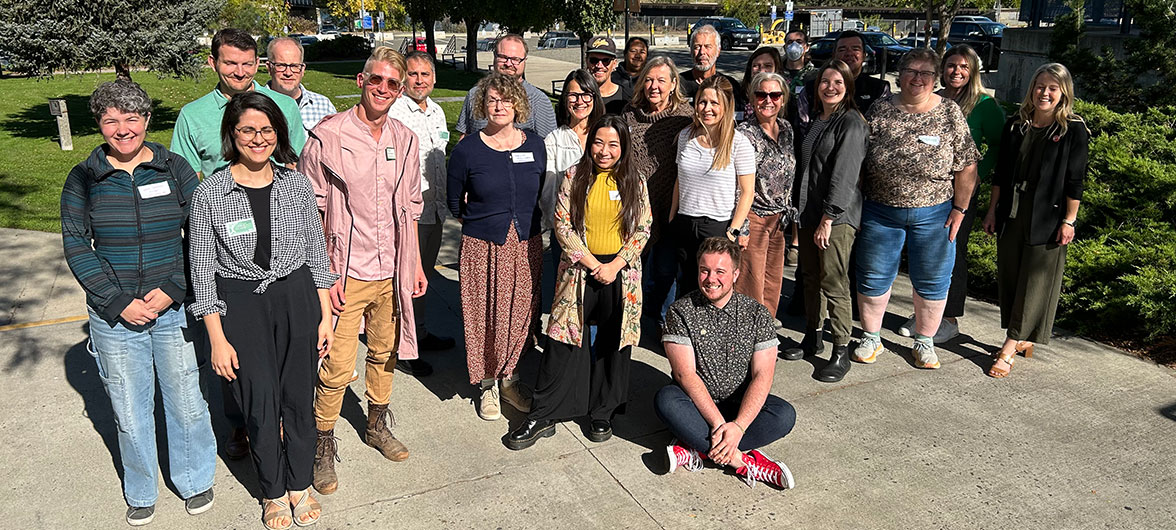
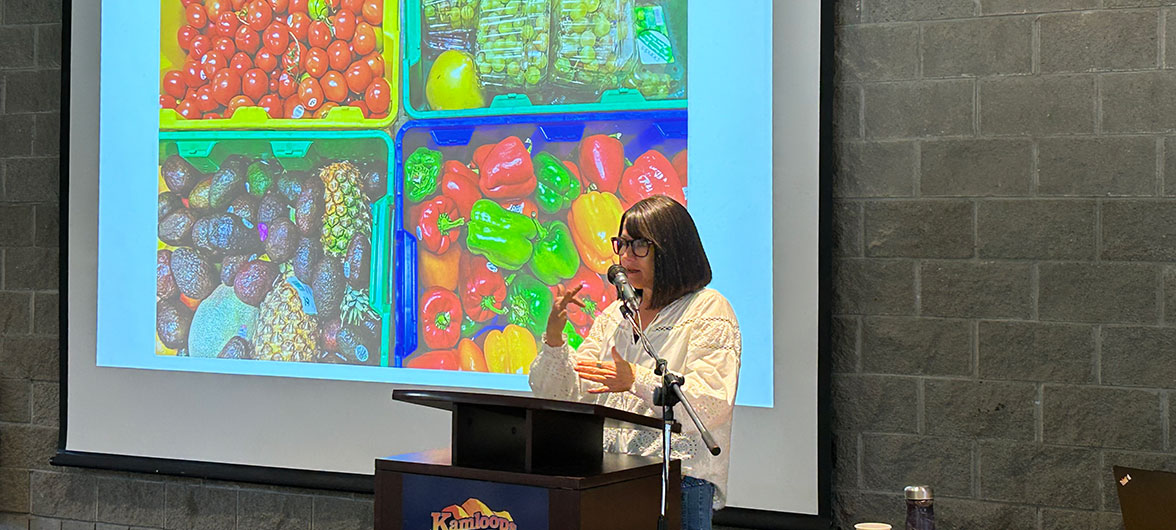
More than 36 community leaders gathered this past October for a workshop marking the 10-year review of the City’s 2015 Food and Urban Agriculture Plan. Hosted as a collaborative reflection and learning event, the workshop celebrated progress to date, identified remaining gaps, and explored priorities for the future of food security and urban agriculture in the region.
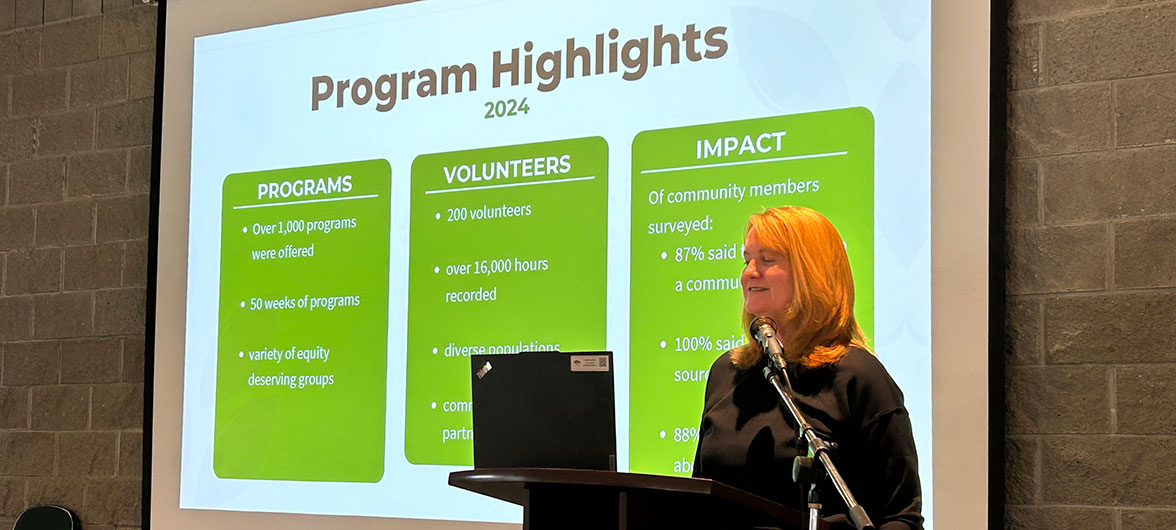
City staff shared findings from a four-month review of the 2015 plan, noting that it was innovative for its time in outlining priority action areas for both the City and community partners. Across the following six focus areas, the review showed meaningful progress alongside persistent challenges:
- Food production and land availability
- Food processing and preparing
- Food distribution, retail, and access
- Cooking, eating and celebrating food
- Food waste and resource management
- Education, governance, and capacity building
Since the plan’s adoption in 2015, significant progress has been made toward meeting its goals and strengthening the local food system. The City has updated zoning and regulatory changes to better support urban and local agriculture, and access to locally produced food has increased across the community.
Several important projects have helped this progress. The Stir, a community-based food processing facility, provides small businesses with a place to prepare and make food products. The year-round Kamloops Farmers’ Market also provides an opportunity for growers, businesses, and buyers to connect during every season. The establishment and evolution of the Mount Paul Community Food Centre has strengthened local food security through its training workshops, affordable produce market, and community meal programming. Gardengate has also been a core addition to the community, supporting individuals experiencing mental health challenges while growing local produce and plants. Local food festivals and events continue to celebrate and promote the region’s agricultural heritage.
Kamloops has also seen improved food waste and resource management efforts, particularly through gleaning and residential composting. Education and skill-building programs have helped people learn more about growing, cooking, and managing food. A best practice guide in Urban Agriculture created by the Kamloops Food Policy Council, builds on existing resources and helps partners learn from successful projects. Partnerships with Thompson Rivers University have advanced food systems research while supporting and demonstrating the plan’s original goals.
While the Food and Urban Agriculture Plan has helped build a strong foundation, there are still areas for growth. Community gardens have not grown as quickly as expected, and commercial composting remains costly and fragmented. With food insecurity still affecting roughly one in four Canadians, participants emphasized the need for sustained, coordinated responses for community emergency meal programs. Many partnerships have been established, but there are still opportunities to work more closely together, clarify roles, and better leverage collective capacity to support a healthy and resilient food system.
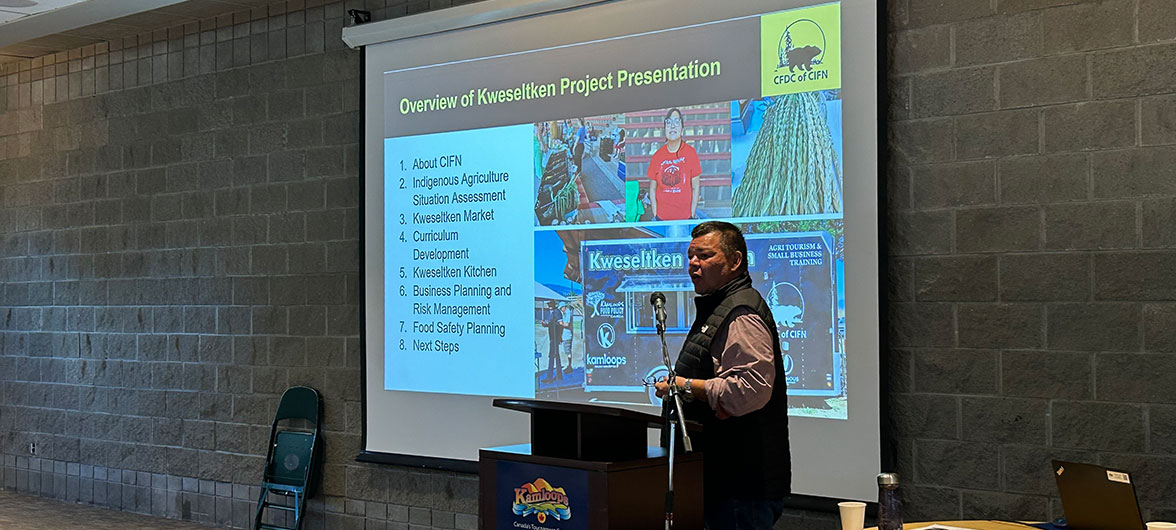
During the workshop, community partners shared how they are responding to growing community needs in an increasingly challenging environment. Speakers from the Community Futures Development Corporation of Central Interior First Nations, the Kamloops Food Bank, Mt. Paul Community Food Centre, and the Kamloops Food Policy Council detailed how climate events, economic pressures, and social change are influencing their work. They emphasized the importance of local food resilience, Indigenous food sovereignty, and stable funding while highlighting the significant progress over the past decade, including major infrastructure investments and expanded program offerings.
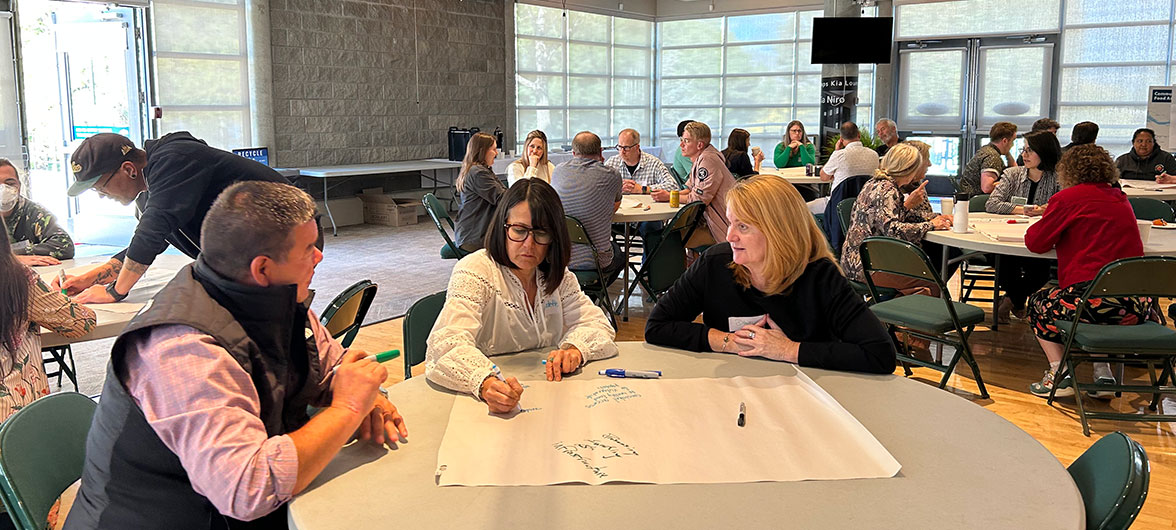
Workshop attendees took part in a guided conversation on key questions. They talked about how food security has changed over the past 10 years, what problems still remain, and what could replace the Food and Urban Agriculture Plan in the future. Participants pointed to persistent challenges, including inconsistent non-profit funding, the lack of a central resource hub, gaps in coordination, and the “missing economic middle” for small- and medium-scale producers. Many ideas and potential solutions emerged, including shared newsletters and community kitchens, quarterly coordination tables, and the development of new funding mechanisms.
The workshop ended with a strong sense of collective commitment. Attendees expressed gratitude for the opportunity to gather in person, a shared desire to break down silos, and a call to broaden participation across sectors. As one participant said, “I’ve had my perspective broadened today.” The message was clear: our community has made real progress over the past 10 years, and by working together with clearer priorities, the next chapter of the region’s food system can be even stronger.