


The City of Kamloops, like many communities across Canada, continues to be impacted by complex social issues, including increased homelessness, limited availability of affordable housing, and the ongoing toxic drug supply crisis.
While housing, health, and social services remain the responsibility of higher levels of government, the City continues to work closely with community partners to urgently respond to the social and health crises and the community safety concerns affecting residents. Council also continues to advocate to the provincial and federal governments for the housing, health, and social services our community requires, as well as for additional supports and resources for protective and emergency service providers to help maintain a safe and secure community.
This summary outlines some of the efforts and actions taken by the City and community partners over the past two years:
Strengthening Community Coordination to Address Homelessness
Understanding homelessness in the community helps inform planning, funding, and service delivery. City staff, along with more than 50 volunteers, conducted the 2025 Point-in-Time Count on October 15 and 16, 2025. The count identified 419 individuals experiencing homelessness during the 24-hour count period—an increase of 34% from 2024. The data collected in the Point-in-Time count helps inform local planning and advocacy efforts, supports funding applications, and contributes to a broader understanding of homelessness at the local, provincial, and national levels.
Over the past year, the City has worked with the provincial and federal governments, Indigenous organizations, service providers, and community partners to strengthen how homelessness is addressed in Kamloops. The goal of this work is to improve coordination among organizations, reduce gaps in services, and create clearer pathways for people experiencing homelessness to access housing, health services, and other supports.
A key focus has been bringing partners together to better share information, coordinate resources, and plan for long-term solutions. Several collaborative groups have been established or strengthened to support this work, including the following:
- Homelessness Response Leadership Table- Established in July 2025, this group brings together senior leaders from housing, health, outreach, Indigenous organizations, social services, justice, and government to help guide local homelessness priorities, funding decisions, and system planning.
- Kamloops Interagency Supports Table - Established in November 2025, this table (also known as the Situation Table) brings together front-line professionals from health care, housing, education, social services, and public safety to coordinate rapid support for individuals and families facing complex challenges. The goal is to connect people with appropriate services before situations escalate into a crisis.
- Systems Improvement Table - Established in December 2025, this monthly working group focuses on improving day-to-day coordination between organizations, identifying service gaps and barriers, and developing practical solutions to strengthen the local homelessness response system.
- HEART Outreach Table – Established in December 2025, this group meets biweekly and brings together organizations providing street-level outreach services. The group coordinates outreach efforts, shares information, and improves support for individuals experiencing unsheltered homelessness.
City staff continue to host quarterly outreach, education, and networking events. These events are designed for outreach workers and others supporting the unsheltered population. They provide opportunities for connection, collaboration, and hands-on learning through group activities that encourage discussion, solution-focused approaches, and cross-agency relationship building, allowing participants to share resources and effective strategies.
Programs and Initiatives that Support Homelessness Response and Community Safety
City staff continue to administer Reaching Home: Canada’s Homelessness Strategy, a federally funded program that helps communities prevent and reduce homelessness through local grant funding. The City administers funding for the Designated Communities stream, with funding decisions guided by a local funding review committee. In 2025, the committee allocated $2.24 million to support local homelessness initiatives for 2026/2027 and 2027/2028. The funding will support programs focused on housing stability, street outreach, recovery services, youth and senior supports, tenancy assistance, and life skills development.
Council approved funding for the Community Service Officer Outreach Response Program, which supports both homelessness response and community safety. The program is delivered in partnership with the ASK Wellness Society and the Canadian Mental Health Association Kamloops Branch through integrated teams of Community Service Officers and outreach workers. Together, these partners provide coordinated outreach services and supports to individuals experiencing homelessness, persons in crisis, and individuals exhibiting disruptive or concerning behaviours in public spaces. The program’s primary objective is to connect individuals with appropriate health, housing, and social supports while contributing to overall community safety and well-being.
Council also approved funding for The Clean Team Program, which is a supportive employment initiative designed to provide meaningful, paid work opportunities for individuals experiencing or with lived experience of substance use, homelessness, or disability. In 2025, the program engaged more than 100 participants across Kamloops in activities such as litter collection, graffiti removal, sharps recovery, and public space maintenance. This program is in partnership with the ASK Wellness Society, the Canadian Mental Health Association Kamloops Branch, The Mustard Seed, SMART Options Kamloops, and the North Shore Business Improvement Association.
On September 2, 2025, the City marked a historic milestone with the swearing in of 25 Community Services Officers as peace officers. The swearing in follows Council’s adoption of the Delegation of Bylaw Enforcement Authority Bylaw on July 30, 2025. While Community Services Officers now hold peace officer status, they remain focused solely on enforcing City bylaws and are not licensed to carry weapons.
The designation provides important rights and protections, including recognition under the Criminal Code of Canada for assaulting, obstructing, or resisting a peace officer in the course of their duties. It also strengthens the City’s ability to achieve compliance with municipal bylaws by giving Community Services Officers the authority to require individuals to identify themselves when lawfully conducting an investigation. This enhanced authority improves accountability for bylaw violations, supports more effective enforcement, and contributes to a safer and more respectful community for residents, businesses, and visitors alike.
In 2025, the Community Service Officer program transitioned to 24/7 service delivery, ensuring around-the-clock support for community safety, outreach, and response needs. Maintaining stable staffing levels has been key to supporting this enhanced service model, allowing officers to respond to concerns at any time, day or night, and strengthening the City's overall capacity to support residents and vulnerable community members.
Advancing Social and Affordable Housing Options in Kamloops
Through ongoing collaboration with BC Housing under a memorandum of understanding established in 2022, City staff continue to support planning, development, operations, and communications for new housing and shelter projects.
Significant progress has been made in expanding social and affordable housing options in Kamloops. Over the past 18 months, several supportive, affordable, temporary, and youth-focused housing projects were opened, announced, renovated, or progressed toward construction, helping to increase housing options for residents with a range of needs. These BC Housing projects include the following:
- Katherine's Place (560 Tranquille Road) - Opened in 2025, adding 39 units of supportive housing for youth.
- The Confluence (346 Campbell Avenue) - Opened in 2026 with 80 affordable housing units for seniors and families.
- Crossroads Inn (569 Seymour Street) - Reopened in 2026 following a major renovation and revitalization project, improving and preserving 51 supportive housing units.
- Genesis Place (654 Fortune Drive) - Construction began on a 48-unit supportive housing development in 2025.
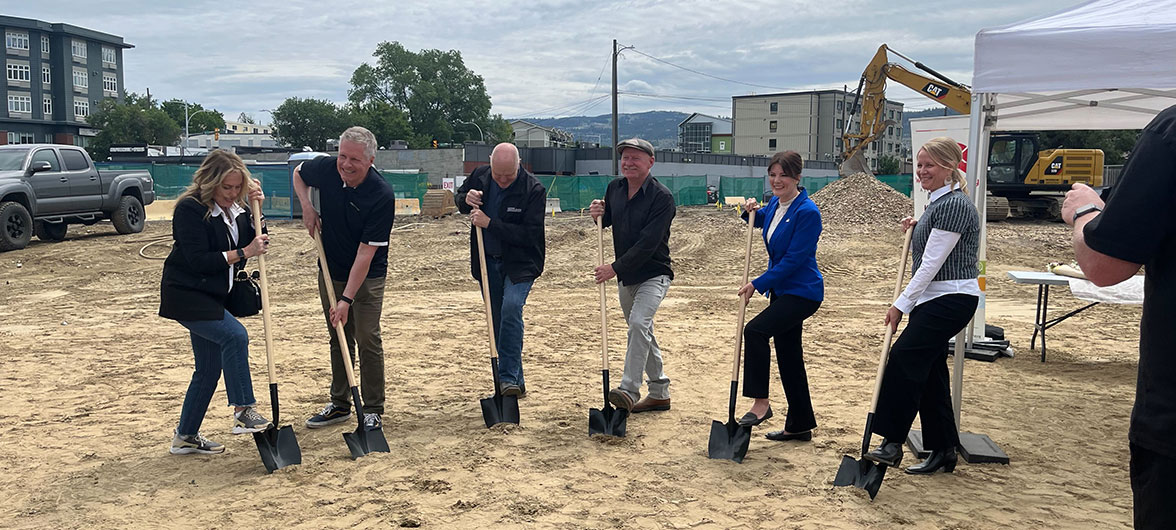
- Mission Flats Manor - Extensive site preparation and works were completed over the past three years to prepare this City-owned site for two modular supportive housing buildings that will provide 98 supportive housing units and replace the existing aging temporary modular supportive units currently on site. Occupancy is anticipated later in 2026.
- 435 Cherry Avenue - Renovations and restoration of a fire-damaged rental housing building were completed in late 2025, returning 42 affordable rental housing units to the community’s housing supply.
- 871 Westminster Avenue - A new 30-unit affordable housing project for women and children was announced, with development expected to begin in 2026.
Together, these projects represent important investments in housing stability and community well-being while increasing the supply of affordable and supportive housing in Kamloops.
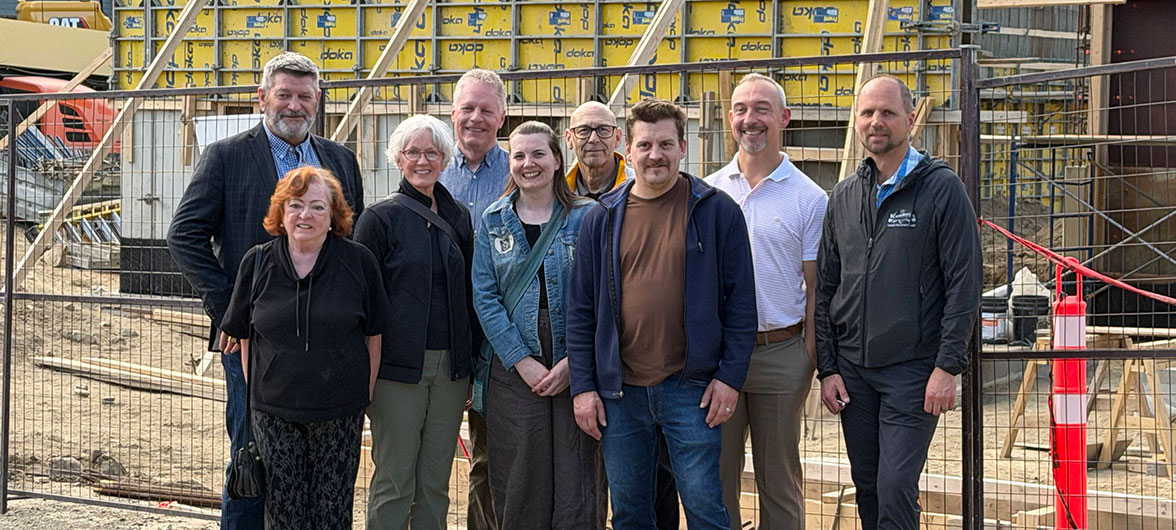
In addition, the Kamloops Community Land Trust Foundation, established in 2023, continues to advance affordable housing initiatives, including the 85-unit BC Builds project at 377 Tranquille Road, which is currently under construction and expected to open in fall 2027.
Advocacy Efforts
Advocacy has remained a key component of the City's efforts. In December 2023, Council and Tḱemlúps te Secwépemc jointly advocated to the Province for additional shelter spaces, temporary housing, and coordinated outreach supports through the Ministry of Housing and Municipal Affairs, the Homeless Encampment Action Response Team (HEART) program, and the Homeless Encampment Action Response Temporary Housing (HEARTH) program.
In 2024, Council’s advocacy efforts were successful with a provincial announcement made in June 2024. The result of these efforts includes:
- Pathways Emergency Shelter - Opened in January 2025, this shelter provides 44 emergency shelter spaces with supports.
- 1449 McGill Road Temporary Housing - Announced in September 2025, this project will provide 56 units of temporary supportive housing on City lands and is expected to open in summer 2026.
- Homeless Encampment Action Response Team (HEART) - Launched in December 2025, the Homeless Encampment Action Response Team (HEART) supports outreach coordination across agencies and includes provincially funded, full-time BC Housing outreach positions, providing dedicated, boots‑on‑the‑ground staff in the community.
- BC Builds Middle-Income Housing - Site preparation began in March 2026 for a 126-unit rental development for middle-income households, the first phase of a project that will provide 251 affordable market rental housing units in the long-underutilized, provincially owned Columbia Precinct lands.
- Purpose-Built Complex Care Housing - Site preparation is underway at 1102 Glenfair Drive for a 20-unit, purpose-built complex care housing development on provincially owned lands located adjacent to complementary health services.
- Solace Shelter - This shelter be operated by The Mustard Seed and will provide 40 year-round modular shelter units for seniors and older adults on provincially owned lands at 1055 Glenfair Drive. Solace Shelter is anticipated to open in the fall of 2026.
Throughout 2025 and 2026, Council and senior City staff met regularly with provincial representatives to advocate for additional housing, shelter, recovery-oriented supportive housing, and daytime services for people experiencing homelessness. These discussions are ongoing and aim to strengthen partnerships, improve coordination, and identify opportunities to address both community needs and neighbourhood impacts through collaborative, long-term solutions.
Council continues to advocate to the Province for changes to the Police Act that support and strengthen the role of Community Services Officers within local government service delivery, including reforms such as peace officer status and body-worn cameras.
Council also continues to advocate for bail reform to better manage repeat offenders. While some improvements to bail reform were passed by the federal government on June 15, 2026, Council will continue to advocate on various public safety priorities to support the health and safety of all residents.
The City recognizes that sustained, coordinated action remains essential to address the complex social challenges impacting our community. In 2026, collaboration with community partners remains critical to the collective efforts to address system gaps, strengthen alignment and coordination of existing resources, and advocate to senior governments for the resources, services, and facilities needed to more effectively support our most vulnerable residents. Council remains unified in its commitment to fostering a safe, vibrant, and resilient community and continues to advocate strongly to other levels of government for the housing, health, and social supports required to meet the needs of Kamloops residents.