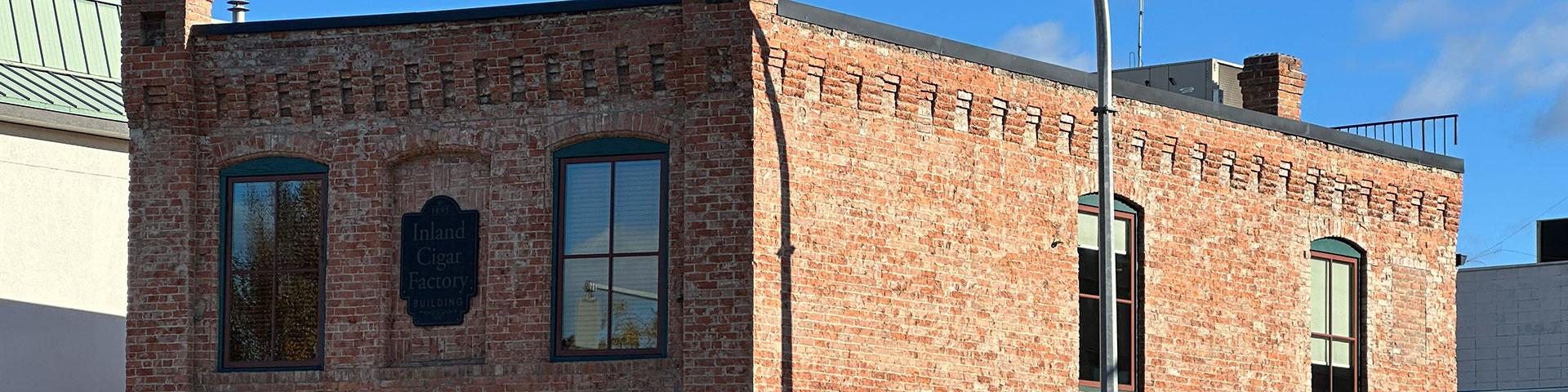
297 First Avenue
Description of Historic Place
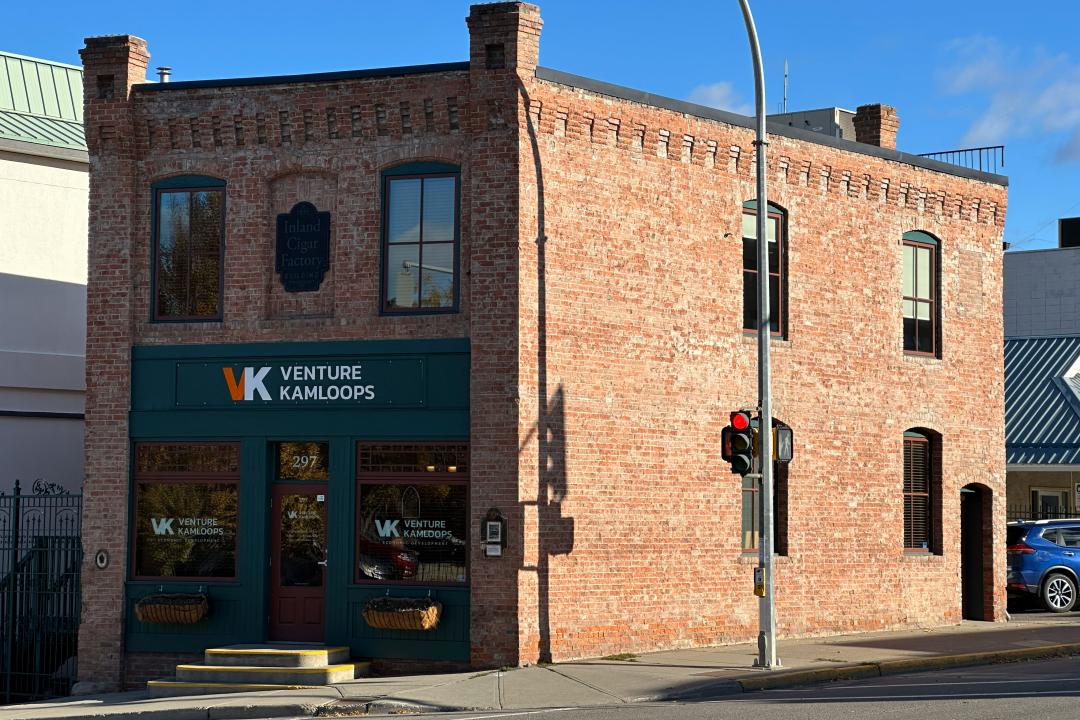
The Inland Cigar Factory is a two-storey, red-brick Victoria-era commercial structure with a
corbelled cornice, arched second-floor window openings and a recessed central entry. It is
situated on an angled lot at the southwest corner of First Avenue and Seymour Street in
downtown Kamloops.
Heritage Value
The Inland Cigar Factory is significant for its ties to the agricultural history of Kamloops and is
symbolic as the centre of a one-time thriving cigar manufacturing industry. George A. Borthwick
(1866-1927), who hailed from Victoria, established the Inland Cigar Factory in 1894. The
following year, the company was restructured and refinanced by Marshall Pollock Gordon
(1862-1929), who owned a local furniture store and served as Kamloops mayor for three terms.
That same year, 1895, this building was erected as the headquarters and factory for the company.
Tobacco for the cigars was imported from Cuba and then blended with locally grown tobacco.
To demonstrate the technique of rolling authentic Cuban cigars, the company brought in a
number of consultants from Cuba. At its height, the company employed a staff of twenty-five
who produced up to 4,000 cigars per day. The Inland Cigar Factory continued to operate in this
space until 1913 when they moved next door; this space was then taken over by the Model
Bakery.
The Inland Cigar Factory is valued for its connection with Kamloops’s first commercial district.
Its location on First Avenue was once the center of Kamloops’s thriving downtown commercial
district, which was situated on Victoria Street West. Over time the commercial district has
shifted further east down Victoria Street. Additionally, the Inland Cigar Factory is valued
architecturally as an example of a vernacular industrial structure from the Victorian era. The
walls are constructed of an early locally-made red brick.
Character-Defining Elements
Key characteristics that define the heritage character of the Inland Cigar Factory include its:
- prominent corner location on an angled lot at the corner of First Avenue and Victoria Street
West - commercial form, scale and massing as expressed by its two-storey height, symmetrical front
façade, rectangular plan and flat roof, with no front or side setbacks - wood-frame and masonry construction, with common red-brick cladding with flush-struck
mortar joints, segmental arched second-floor window openings, blind arched opening above
central entry, with rubbed brick outline and herringbone infill, and corbelled cornice - early prefabricated galvanized drainage scuppers at rear