
When wildfire forces people from their homes, the impact reaches far beyond the people who are evacuated. Pets, livestock, and other animals also need a safe place to stay until their families can return home.
For one local family this summer, helping those in need meant opening their farm to more than 100 foster birds.
Casey Donaldson, who owns a family farm in Prichard, already had 154 birds of her own this summer when a family friend told her there were chickens being temporarily housed at the Kamloops Emergency Support Services’ Animal Care Facility for evacuees. The centre, run by the Canadian Disaster Animal Response Team, Ruff Start Rescue, and Four Paws Foundation, had a healthy program in place to temporarily foster out dogs and cats, but at that point, no similar opportunities for chickens.
Casey immediately offered to help. On August 12, she welcomed 53 evacuated birds to her farm, giving them more space and a comfortable place to stay while their owners dealt with the challenges of being away from home.
Then the City reached out again. Another 49 birds needed a place to stay.
Casey was already out of enclosures, but she did not let that stop her from helping.
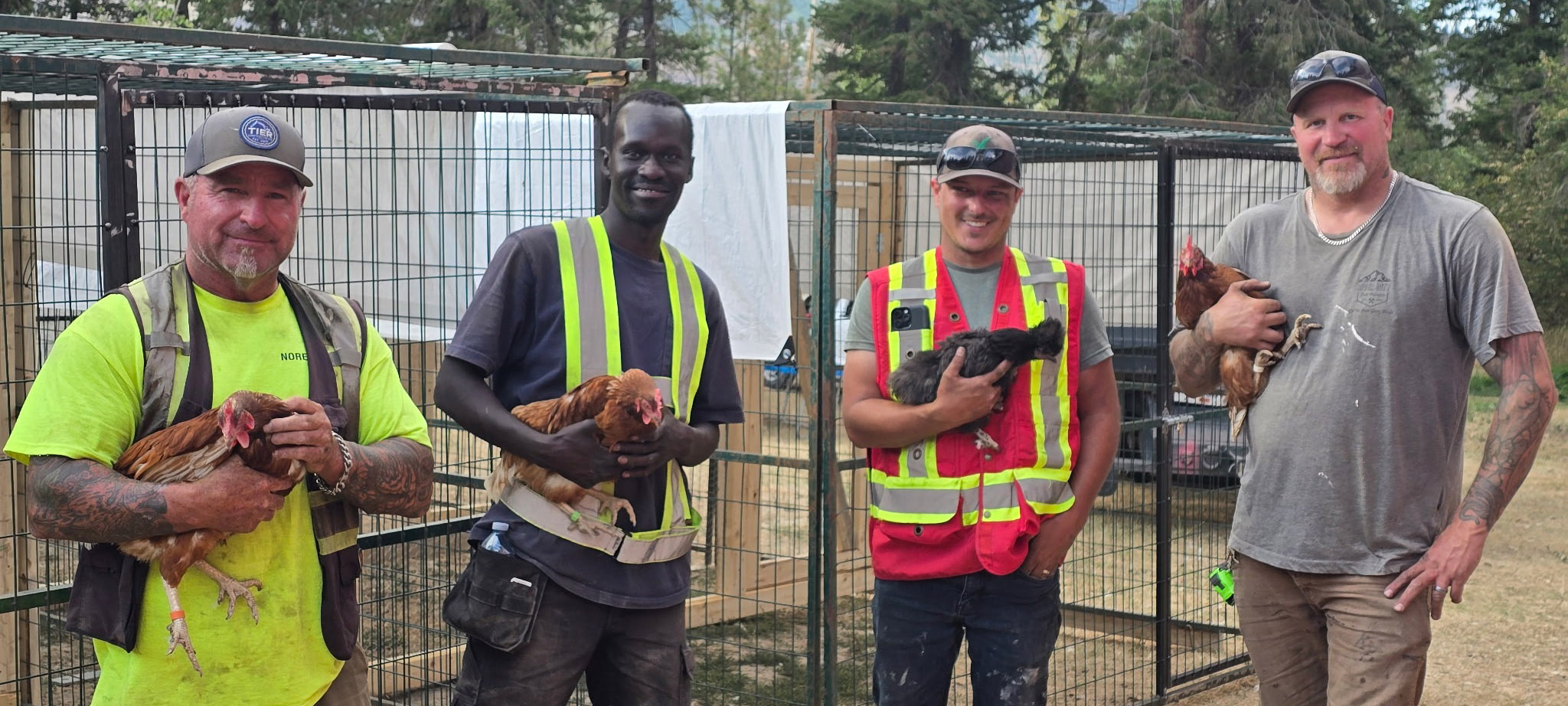
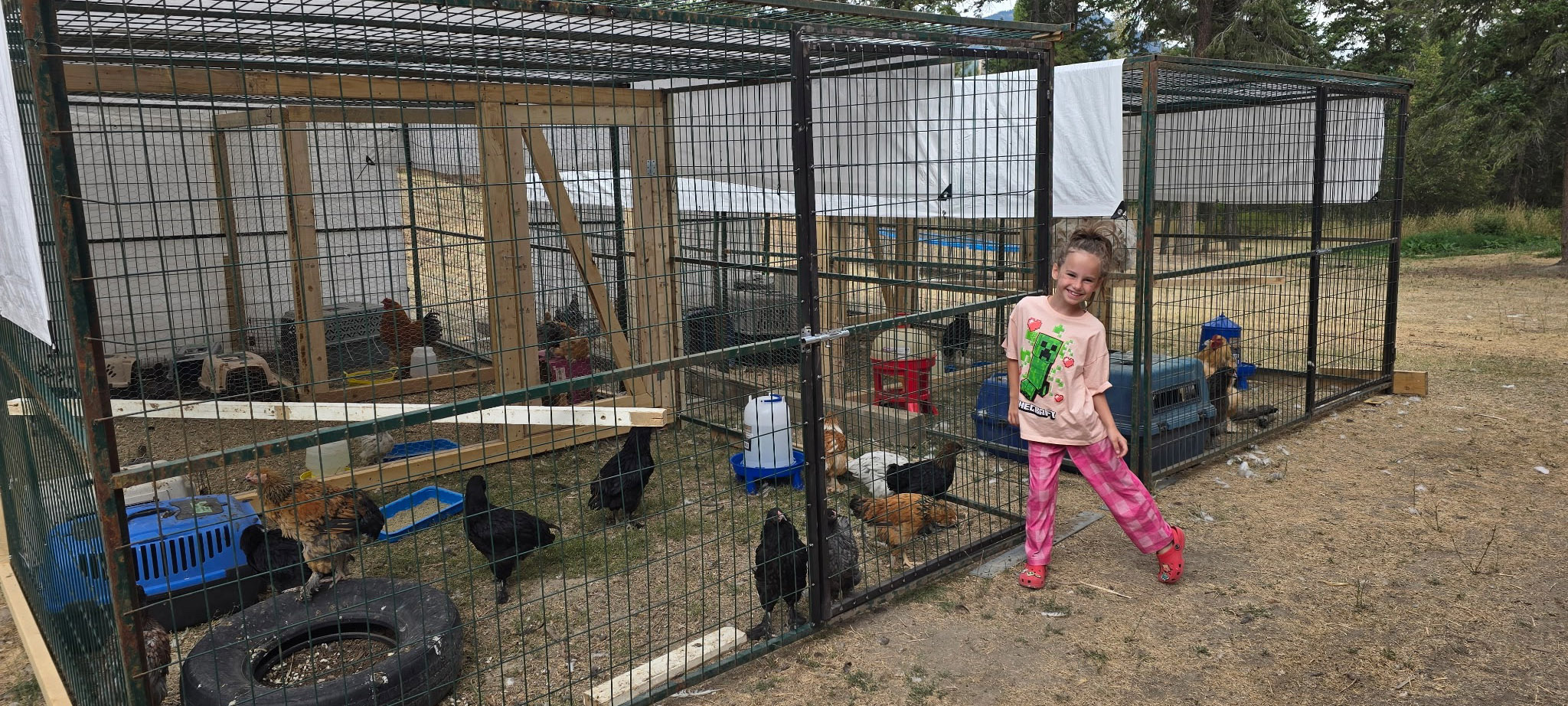
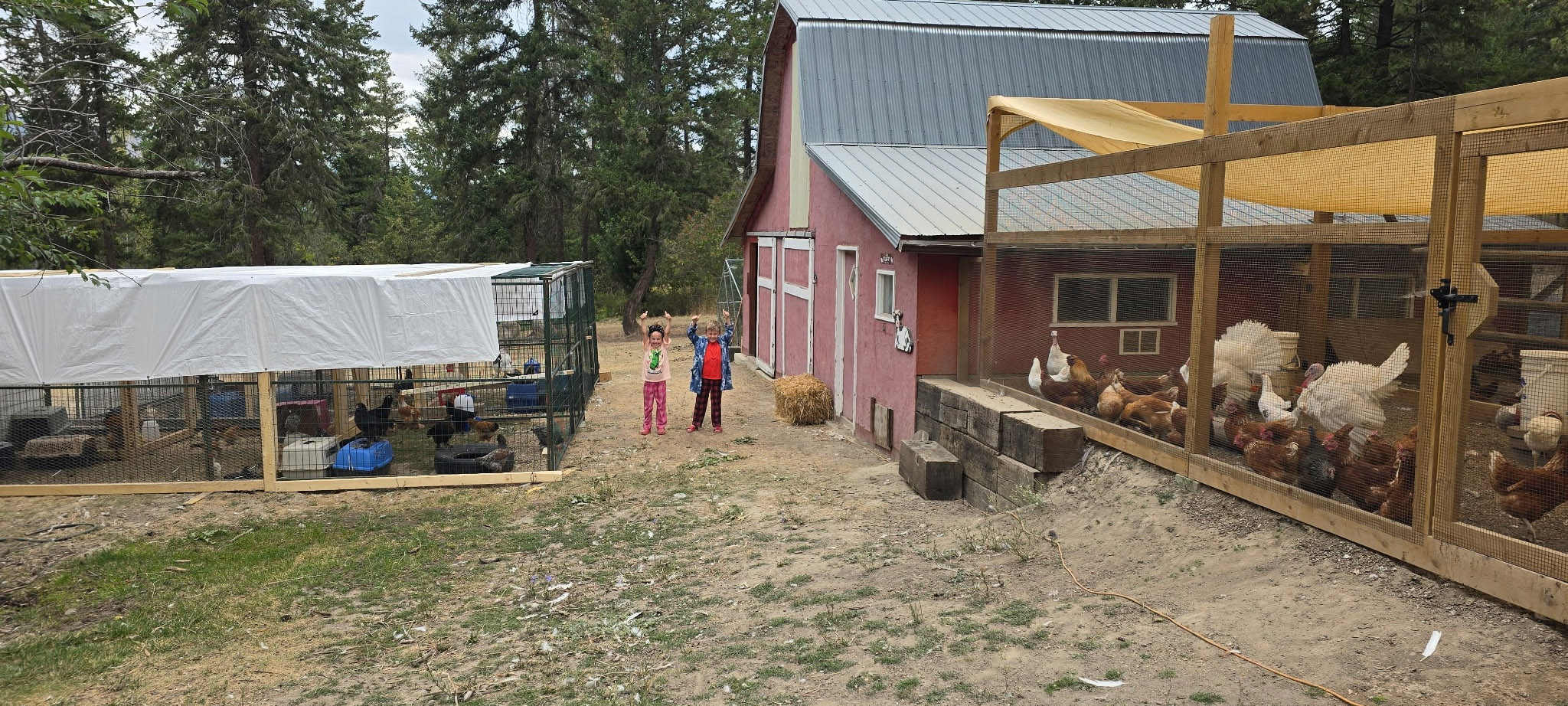
“I would be happy to take more chickens if the City has any temporary enclosures we can use,” she said. Within days, the City contracted Urban Appeal to create additional space on the property. The team worked quickly to build two large enclosures, giving the evacuated birds a safe and secure place to stay.
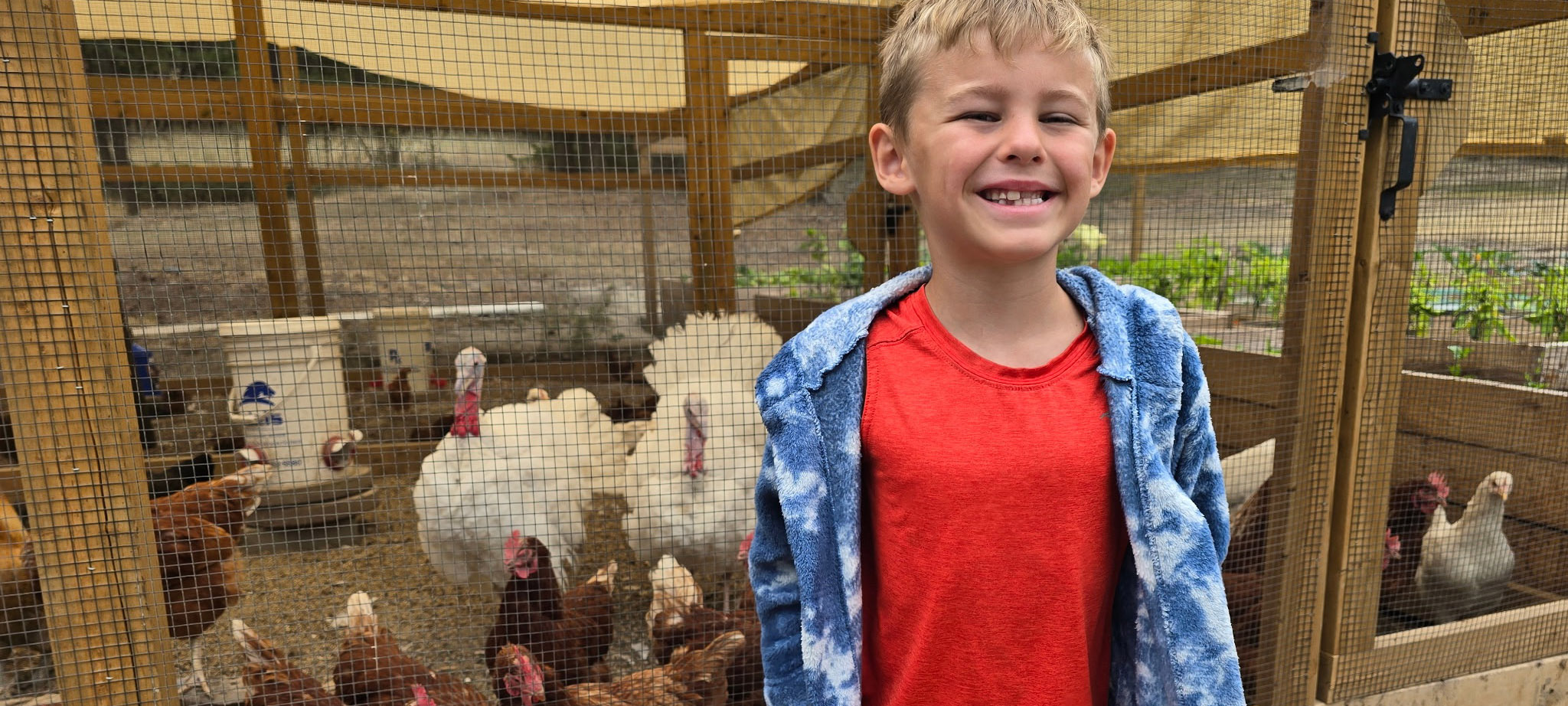
Before long, Casey, her partner Marcel, and their twins Hunter and Kennedy were caring for more than 100 evacuated birds, including mostly young chickens, several roosters, and one turkey.
The community response did not stop there. Purity Feed, Agri Supply, and The Horse Barn have all donated feed to help care for the evacuated birds. Purity Feed also provided feeders and waterers to help complete the new enclosures.
It is a tangible, feathery example of a much bigger community wildfire relief effort.
From volunteers and animal care teams to local businesses, contractors, farms, and families, people across and around Kamloops continue to find ways to help wildfire evacuees. Each contribution eases one more burden for people who are already dealing with the uncertainty and stress of being away from home.
Casey remains in regular contact with the birds’ owners, who are hopeful they will soon be able to return home with their flocks.
In the meantime, the extra noise and activity have become part of daily life on the farm, now 250 birds strong. Casey and her family have embraced their temporary extended flock and have thoroughly enjoyed caring for their unexpected guests.
Their kindness reminds us what makes Kamloops such a welcoming community. When neighbours need help, people step forward, make room, share what they have, and work together to get it done.