
118 Victoria Street
Description of Historic Place
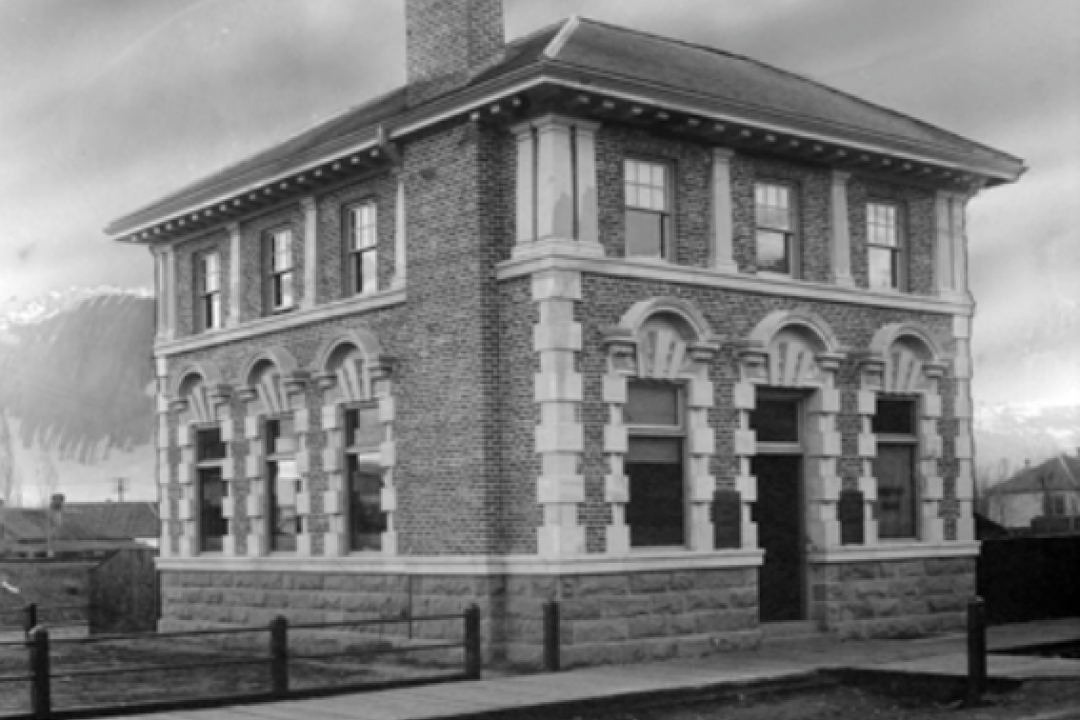
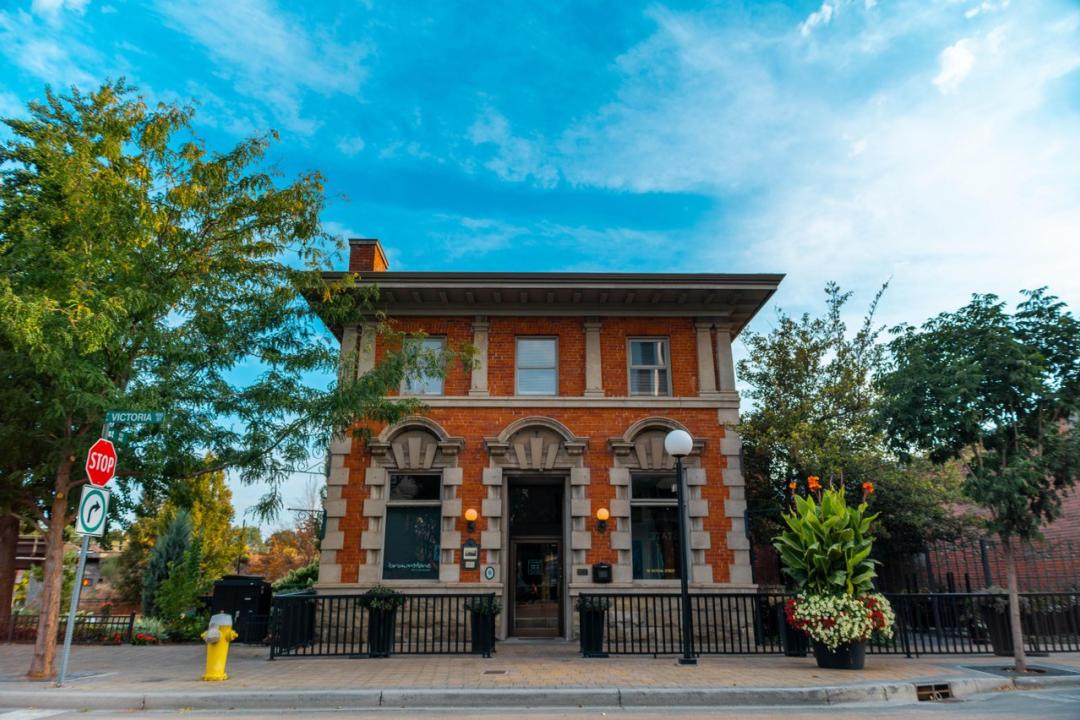
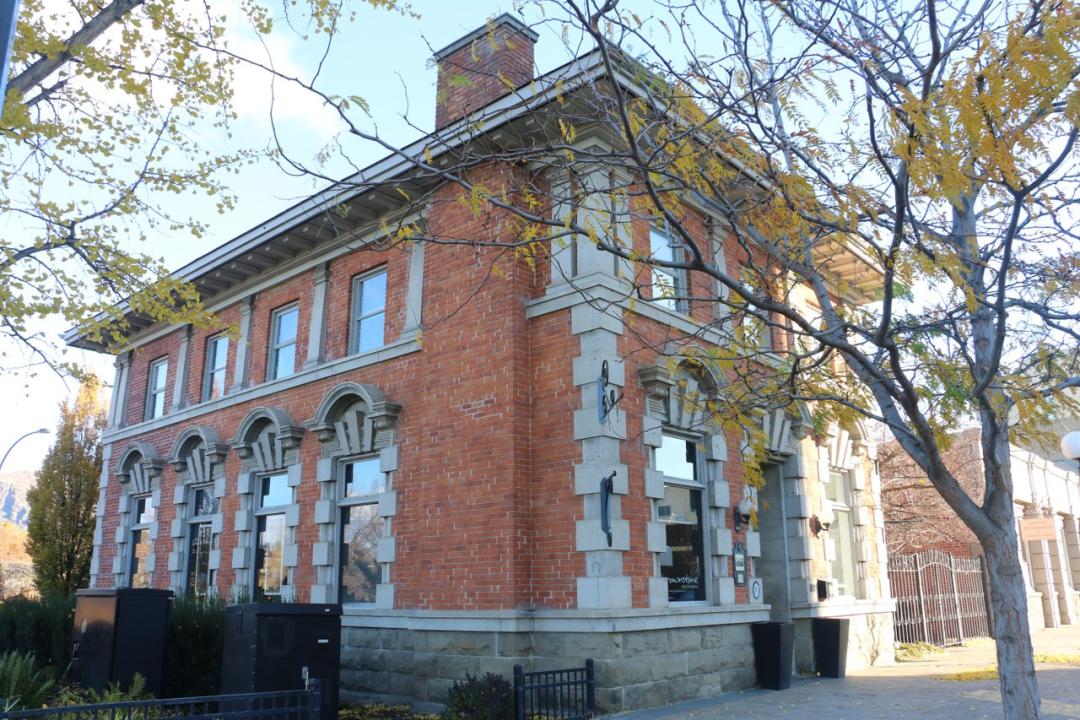
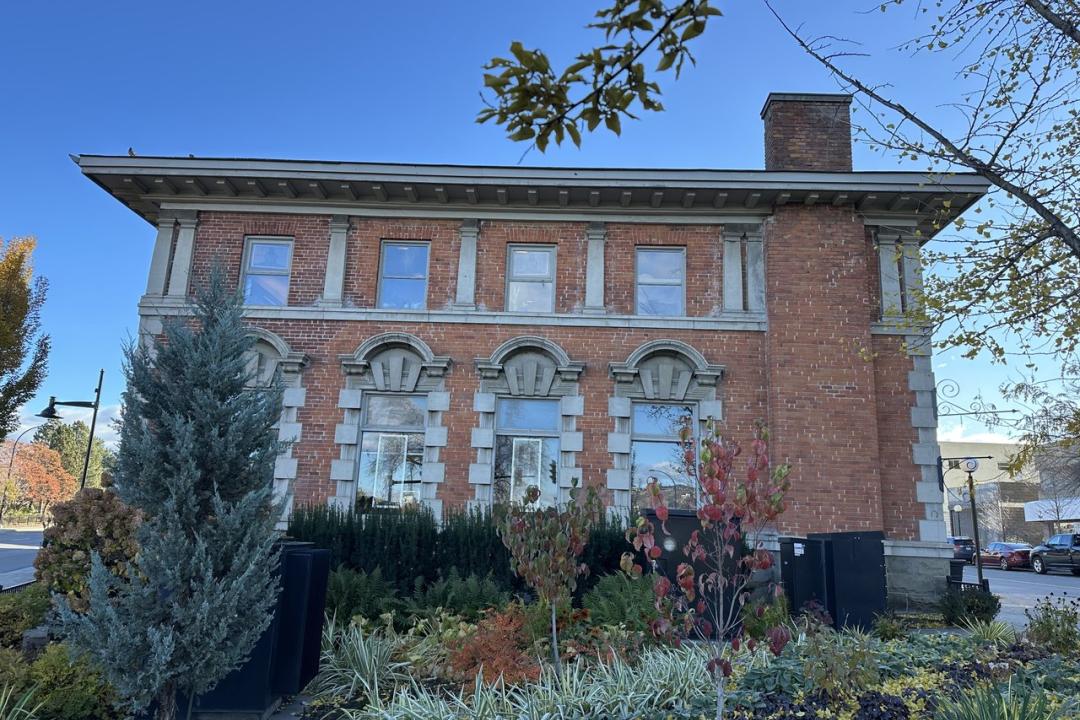
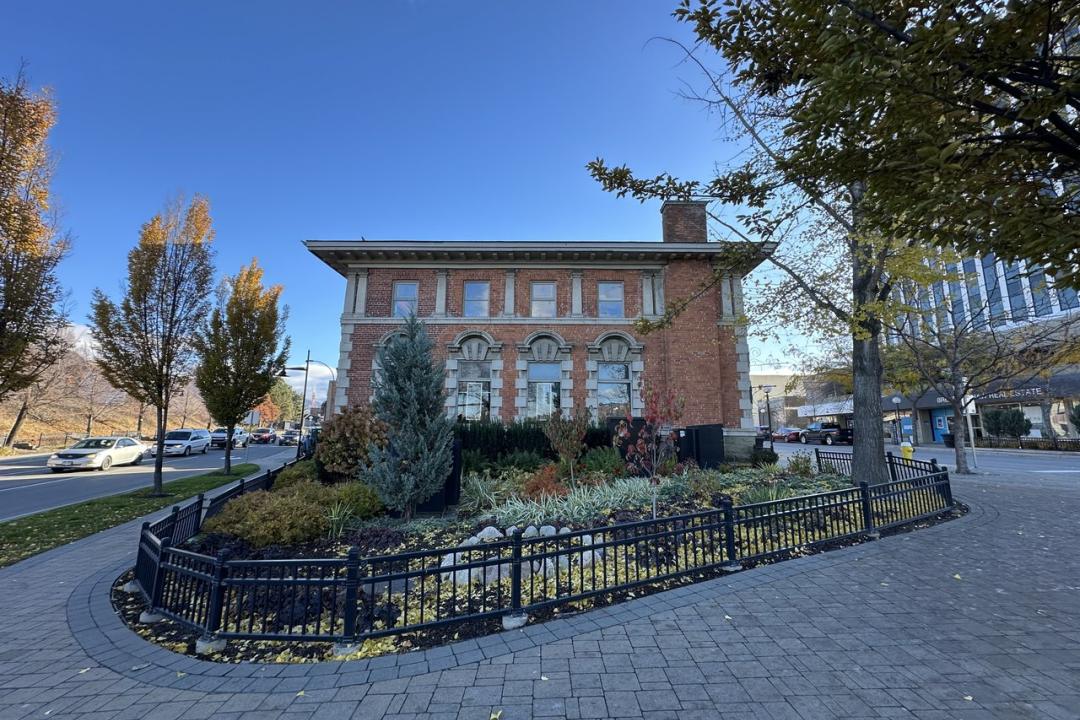
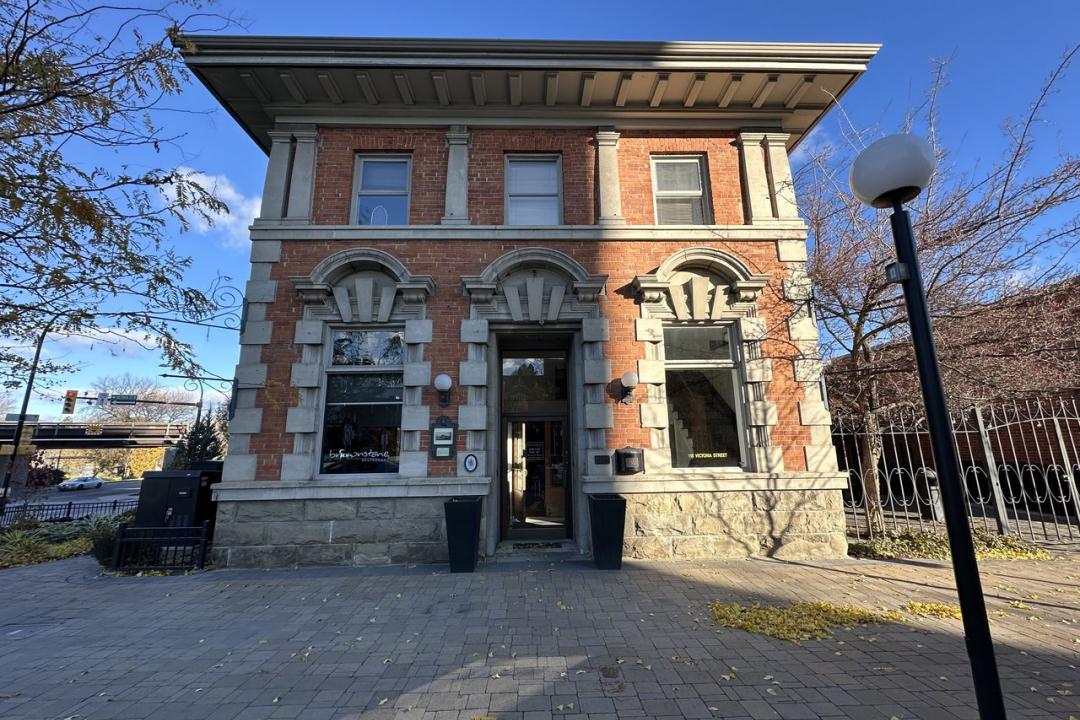
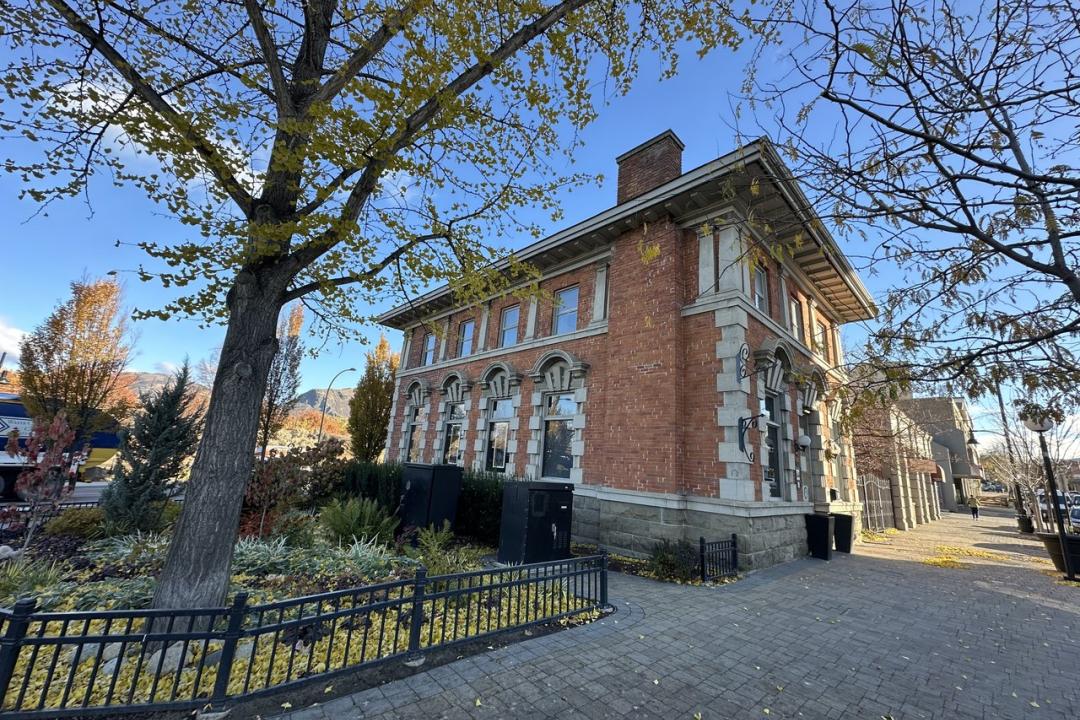
The Old Bank of Commerce is a two-storey Edwardian Baroque commercial building clad with
Kamloops pressed red brick and dressed stone trim. Situated at the northeast corner of Victoria
Street and First Avenue, the building is distinguished by its symmetrical front façade, granite
foundation with raised tuckpointing, modillions, pilasters, quoins, external brick chimney,
dentils, lunette windows and a hipped roof. The original 1904 structure was enlarged in 1912
with additions to the rear and the eastern side.
Heritage Value
Built in 1904, the Old Bank of Commerce is valued for its high quality architecture. The sophisticated design of this branch bank, inspired by the Edwardian Baroque style that was fashionable in Britain at the time, conveyed a sense of conservatism, permanence and security, which were particularly desirable characteristics for a financial institution. The Temple Bank was a wide-spread phenomenon, and throughout the province, on the main streets of virtually every community, these "temples" were seen as an important symbol of civic pride and progress.
Toronto-based architects Darling & Pearson, as the architects for the Canadian Bank of Commerce, provided many sophisticated Classical Revival designs for branch banks built throughout western Canada. The partnership of Frank Darling (1850-1923) and John Andrew Pearson (1867-1940) was a long and prolific one, and was a major force in Canadian architecture, climaxing in the federal government's request for Pearson, along with J. Omer Marchand, to provide the design for the rebuilding of the Centre Block of the Canadian Parliament Buildings in Ottawa after it was destroyed by fire in 1916.
Darling & Pearson were responsible for close to a thousand bank projects, ranging in size from urban headquarters to small wooden structures in remote locations. The Old Bank of Commerce displays high quality materials and craftsmanship throughout. The front facade is clad in dressed stone and Kamloops pressed red brick, manufactured at the local brick factory in Mission Flats. Local contractors Johnston & Gill were responsible for the brickwork and masonry. Robert Mackay (1865-1937) completed the interior of the building which also exhibits the highest quality of materials, such as a marble banking hall floor.
The Old Bank of Commerce is additionally significant as a symbol of the development of the corporate banking system in Kamloops and is valued for its association with the Canadian Bank of Commerce, which occupied the building until 1924. The first bank in Kamloops was the Bank of British Columbia, which occupied a wooden building on the southeast corner of Victoria Street and First Avenue in 1887. In 1900, the Canadian Bank of Commerce absorbed the Bank of British Columbia and utilized the same premises until 1904 when this building was erected. Among the employees of the Old Bank of Commerce was Canadian poet and writer Robert Service (1874-1958), who worked as a clerk at this bank between July and November of 1904.
Furthermore, the Old Bank of Commerce is a representation of the economic growth and development of Kamloops during the Edwardian era. In its pioneer phase, the economy of Kamloops was based on the trade of fur, gold and cattle. With the arrival of the Canadian Pacific Railway in 1885, Kamloops began to emerge as a prospering business community with anabundance of employment opportunities. The advent of the railway not only allowed for the transport of people, but also permitted the mobility of goods, which in turn, benefitted trade in the region. Between 1885 and 1905, the population increased five-fold; this surge can be directly linked to the rise of financial institutions such as the Bank of Commerce. In further response to the growing importance of Kamloops as a regional centre, the bank was expanded in 1912 with additions to the rear and the eastern side. The building was occupied between 1953 and 1964 by Kamloops City Hall
Character-Defining Elements
Key elements that define the heritage character of the Old Bank of Commerce include its:
- corner location, facing Victoria Street and First Avenue in downtown Kamloops
- monumental commercial form, scale and massing as expressed by its two-storey height, symmetrical massing with central entry, excavated basement, hipped roof and cubic plan, with 1912 additions at the rear and eastern side
- masonry construction such as granite foundation with raised tuckpointing, red-brick cladding, and dressed stone trim
- Edwardian Baroque features such as engaged pilasters with exaggerated entasis, overscale lunettes placed over windows with giant keystones, eave modillions, and block quoins
- fenestration, including wooden sash windows on the ground floor
- external red-brick chimney
- original interior features such as banking hall marble floor, wooden trim and floors, interior fireplaces and massive bank vault